
WITH SANJAY BALU
When the Art Outlives Its Storyteller
V. Balu carried his art around the world as a one-man mission of peace. Twenty years after his death, the work is still here. The storyteller is not.
His sons have rebuilt the gallery, the archive and the website. What they have not rebuilt is the audience: a generation that never met him, in an art market that has changed completely. They asked the panel for a strategy, a way to reach new people, and technology to protect the work.
Listen onApple Podcasts Spotify
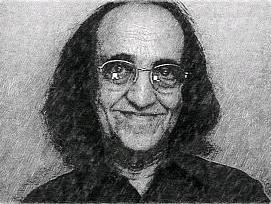 SEP26
Sanjay
Balu
WITH HIS BROTHERS VIVEK AND ASHOK
Legacy × Audience
WHO TELLS THE STORY NOW?He was the story in many ways.
V. Balu was an executive in the government of India, at one point head of the Indian Coffee Board, who began painting part-time. He moved on to oil paintings and collages, many of them made from paper that would otherwise have been thrown away, and found he could use the work to communicate a theme. The theme was peace, and his conviction that one person can make a difference. He travelled with the work, self-funded, exhibited at the UN, and was appreciated by figures including Desmond Tutu and the Dalai Lama. He was known as a one-man mission of peace.
He died almost twenty years ago. His three sons kept the work close and got on with their careers: Sanjay in technology strategy in Boston, Vivek in business, Ashok in real estate development. In the last few years that changed. They redeveloped the family property, opened a gallery for his work, rebuilt the website at vbalu.co.in and began working with galleries, with Vivek doing much of the heavy lifting. Sanjay put three questions to the panel: what structure and strategy the estate needs to build credibility and reach the right buyers; how to make the work relevant to a generation that never met him; and which tools could catalogue the work, prove its provenance and protect it from counterfeits, cost-effectively.
Not a time problem
Stephen rejected the premise. Art is timeless, so no time was lost. What stopped was the telling: the man who travelled, exhibited and explained the work was the thing carrying its message. Sanjay agreed: "He was the story in many ways." In Stephen's view that made the bottleneck a story, one only the family could write. Marketing and distribution come after it, and are the more solvable part.
An avatar that speaks, not one that paints
AJ asked whether his books, writings and any recordings could be used to build an AI avatar of him, so that his core messages could reach an audience again in a new form. Christian took it further, to an avatar creating new paintings in his spirit. Sanjay drew the line there. He liked the avatar for communication, but the original work has to be desired before any new version means anything: nobody wants a new Mona Lisa unless they already want the first one.
Walk his path again
AJ suggested studying how V. Balu built his audience in the first place and translating each step into its present-day equivalent. Stephen called it a way of honouring him by construction. Sanjay named the hard part: his father's reach came through connectors, people of influence whose appreciation opened the next door, and the brothers could put in hours every week without finding the other side of that equation. Stephen's answer was that markets are not changed but created, and a market this specific needs one person whose sole job is creating it.
Find the audience by testing for it
Nobody claimed to know where the next audience is. Brad and Stephen both proposed finding out the way paid advertising does: many variations of the story, pages and campaigns, measured, with more effort poured into whatever people respond to. Conor suggested events that put the work in front of new people in a new way. When Christian mentioned the father's passion for coffee, Brad suggested coffee houses and book clubs, alongside short lines from his books posted on a steady cadence.
Stephen, who said at the outset that art had never interested him, asked himself why, and landed on the freshest idea of the hour: treat each work as a prescription. Ask how someone is feeling, and show them the painting that answers it. Sanjay called it mood art.
Where the session landed
Near the end, a viewer wrote in to say the most moving part of the hour was three brothers speaking with such love about their father, and that this belonged in the story too. Brad placed it as the top layer, with the father's own words, the events and the avatar beneath it.
Some questions got direction rather than answers. Pricing, the estate's legal structure, and authentication and provenance tooling were named but not worked, and Sanjay closed by pointing out that putting the collection online at high resolution would make it easier to counterfeit. The panel followed up with a written plan for the first ninety days. It is a plan to test, not a result, and each of the open questions is a candidate for a return visit.
Read the full transcript
Automatically transcribed from the live session and lightly tidied: trimmed to the show itself, with attendees numbered rather than named. The words are unedited, so the odd sentence is clipped.
Christian Nicolai: So gentlemen welcome to the show. My name is Christian Nicolai and I welcome our guest Sanjay Balu and…
Vivek Balu: Hey.
Christian Nicolai: also his brother Vivek welcome the two of you to our show. And before we go deeper into our guest story and problem, I would like to take a minute and also welcome the fabulous five here. And give everybody a minute to introduce yourself briefly little bit different every time and I'd like to pass around the best looking guy first. So Stephen please go ahead.
Stephen Nickerson: No pressure. Thank you so much, Christian. so my name is Stephen. I'm from Canada. I live in Costa Rica, although I travel around a lot. my primary mode is problem solver.
Christian Nicolai: having more leveling.
Stephen Nickerson: I like to solve really hard problems. I don't like to do the same thing twice. So, I have an extremely wide range of skill sets and areas that I like to solve. But anything that can help somebody break a bottleneck and move forward on a project is kind of my favorite thing to do, which is a part of what we do here on this show together. And technology background, marketing background, finance background, serial entrepreneur, and a bunch of other things along those natures.
Christian Nicolai: and living in the jungle.
Sanjay Balu: Come on.
Stephen Nickerson: And I am presently in the jungle. You can't see it at this thing.
Christian Nicolai: It's almost Wow.
Stephen Nickerson: I'm in the jungle and I haven't eaten in at least eight days.
Brad Wilcox: It actually does look like a jungle, Stephen.
Christian Nicolai: Yeah.
Stephen Nickerson: Yeah, I could probably if I get out a little closer to it so you don't see the blur.
Conor Sweeney: Yeah, the glass roof, Thank you,…
Stephen Nickerson: Yeah. Then you can't see it,… but once you get back here you can't see with the…
Christian Nicolai: You need to invite us.
Stephen Nickerson: but come on down.
Christian Nicolai: You need to invite us, Stephen. Yeah.
Stephen Nickerson: Jump on a plane. It's not hard to get here.
Christian Nicolai: Thank you, Stephen. And we topped that with the youngest in the round. Conor, please share a little bit about yourself here.
Conor Sweeney: Christian. Thank you, Stephen. And welcome Sanjay and Vivek. My name is Conor and my experience lies for the most part in the whiskey business.
Vivek Balu: I like that.
Conor Sweeney: So I started my career in New York City going doortodoor selling a premium Irish whiskey and really terrible job for a 23 year old fresh out of college. so yeah, I had a lot of fun and quickly quickly had to learn how to sell. yeah, that's what they say about New York, right? So I spent 18 months in New York and then another year and a half traveling around the US training our sales teams. spent a further six years in Europe, Middle East, Africa. always as a traveling salesman and two years ago met Christian in India. after a meditation session and our first conversations were about philosophy. as you probably know, Christian is a wealth of information on that topic and we later got into sales. and for the past two years we've been managing 4Steps2Win. I'm a managing partner. and also have two of the best AI mentors in the game with Brad and Stephen. So, I've dove into that as well.
Sanjay Balu: Great.
Conor Sweeney: And yeah, it's been an incredible journey and I'm looking forward to learning more about you, Sanjay, and maybe VC as well.
Christian Nicolai: Thank you, Thanks for sharing your Irish heritage. And we heard that Trump lifted the tariffs to get Irish whiskey cheaper into the US which brings us to AJ. So he's actually benefiting from that right if we would drink that whiskey. So AJ is our human accelerator and living in Utah but right now in South Dakota. what should we know about you or what don't we know about you?
AJ Maxwell: So, I spent a good chunk of my career in enterprise a lot of transformational work at GE and then I spent a good chunk at Lockheed Martin.
Christian Nicolai: I doesn't know him. Yeah.
AJ Maxwell: So, I have kind of a eclectic background, but mostly in enterprise and then I decided to make a life change and I moved my family to Costa Rica and that's where I met Stephen and I spent a decade in Costa Rica and now I'm back in the US and my passion is really bringing people together. and the problem for Alignify my business found me in a large enterprise business the world's leading manufacturer of AI chips and I just saw this massive coordination layer and… so my whole mission in the last year is developing an organization to help bring people together and eliminate that coordination layer. and I have this beautiful simple formula quality of initiative multiplied by acceptance equals effectiveness. So acceptance is the force multiplier.
Christian Nicolai: Yeah, acceptance bring me to we have some waiting guests in the Boom. AJ, can you accept them? That would be awesome. last but not least, our, American in Ubud in Bali, to also introduce, our friend Brad who is, always enhancing our problem solving with his sharp brain. A short contributions but to the point.
Vivek Balu: Yeah.
Christian Nicolai: Brad, please.
Brad Wilcox: Okay, I appreciate it. I want to draw a bridge to India.
Sanjay Balu: Yeah, perfect.
Brad Wilcox: I am a Ubud, but I spent some years in Bangalore Vivek and Sanjay with Startup which is Tim Draper's initiative. He's got 16 different startup houses in different countries. it's in u Kerala I want to hopefully pronounce that correctly and also they have one in Hyderabad as well. so was there for about three or four different events doing hackathons recently building digital
Christian Nicolai: What happened? Yeah.
Brad Wilcox: countries. A little bit of a tangent, but I want to say I have such good memories and still really long lasting friendships from a lot of the startups. I mean, the energy is still with me from a lot of those teams in India and I just want to take that into this podcast. So before it,…
Christian Nicolai: Yeah. everything. Okay.
Brad Wilcox: I've got 15 years experience in product. I'm a product guy. I live close to the user. I think about how to feature enhancements, how to make the product better, more competitive, fixing bugs, maintenance, security, those kinds of things. So also of course interfacing with the rest of the business. But I think my heart is really on the front lines of building something really unique that is in front of what people need before they know that they will need it. So that's my energy here. I really appreciate you guys coming and…
Christian Nicolai: Awesome guys.
Brad Wilcox: I'm excited for the show.
Sanjay Balu: Nothing.
Brad Wilcox: Back to you.
Christian Nicolai: And now I would like to switch over to Sanjay and frame our show today that Sanjay Vivek and welcome Ashok. He just joined in. the three brothers they grew up in a household which I have always been invited with an open heart so open and a house of an artist. So they grew up in house of an artist and they have how could I say participated in beauty all around and wisdom all around. So that is what I've experienced and when I was in their house in Bangalore and sharing time with all of them and especially their father and that brings me to Sanjay who is today living in Boston and he is a serial like successful businessman in different industries.
Vivek Balu: Oops.
Christian Nicolai: right I think you are in the finance industry. sharp man. You always impressed me with his intelligence and dedication to address topics.
Sanjay Balu: No. No.
Christian Nicolai: And Sanjay before we pass the mics to your brothers, would you just frame a little bit about yourself but then come straight to the point? Why are you here today? What can we solve for you? Take each If you don't section
Sanjay Balu: Absolutely. thank you for inviting us to the show here. as Nico mentioned, I grew up in home full of art and along with my brothers. Nico was kind enough to give me the benefit of being a businessman. I've mostly been a corporate guy. but in multiple industries, Retail, financial services. my focus has been architecture, technology strategy, vendor management, and all of those areas.
Christian Nicolai: Don't second.
Sanjay Balu: So there's always been this binding force of art at home and we wanted to kind of bring a problem related to that. my brothers who are on the call and Vivek especially has been doing the heavy lifting on this in terms of getting this initiative off the ground. Why are we here on the call right what is the situation the background as Nico talked about was my father was a artist who spent his life creating paper collages oil paintings and as part of this took him all around the world and he got a lot of recognition during his lifetime his art was loved by art lovers, statesmen, cultural figures and all that. However, he passed away 20 years ago. It's been almost 20 years since he has passed. So, what does that mean? So, if you look at this situation, the complication for us is that in the years that followed, my brothers and I, I did what all families do, right? We enjoyed his art personally in our homes and we got lost in our careers, right? We've been busy trying to make sure our lives were moving forward. and each of us in different areas. So I was in the technology area. Vivek he was in the business area and my brother Ashok is in real estate development. So there's a lot of activity and life that we went through there. So Balu my father his art was very much loved but it was quiet because it was not allowed to be speaking to a lot of the rest of the world. We had kept it within our realm. So however something shifted in the last few years. We redeveloped the family property. we opened a small gallery which is the work that I was talking about that Vivek and my brother have helped with and we've rebuilt a website and you could see the link on my background vbalu.co.in. So we believe the foundation is there but 20 years is a long time right and whole generation of folks have grown up without knowing who V. Balu is Right. And we have started working with galleries now but it's still very much in its early stages and a work in progress. So what our basic question around here is how do we make up for lost time right 20 years a long time.
Vivek Balu: Oops.
Sanjay Balu: How do we do this in a sustainable manner and also not lose the soul of what our father created, and so for the ask for us from this panel is on three fronts. So make a note. Firstly, is there what is the right structure and strategy for an estate like ours to build credibility and market the works to the right audience and also get the right price points for those works. Right? That's the first ask. The second is how do we get through to the new generation people who never interacted with him personally or read his works have seen these things in person how do we make this relevant for them and discoverable and the third is the technology component and I didn't want to lead with the technology how do we cost effectively leverage tools that are out there like authentication tools digital cataloges, provenence platforms. We want to protect his work against counterfeits. We also want to make sure that anybody who gets his work is sure that it's an authorized work and create this market where we want the art to spread, but we also want it to be protected. on the link you could see that his works speak for themselves. we have the archive, we have the gallery, we have the foundation. The question now is how do we get an exhilarated path forward so we believe we have the foundation and maybe the brain trust on this call can help us So with that I'm going to pause and say Vivek or Ashok do you want anything to add anything to that?
Vivek Balu: Hi guys. I think You covered almost everything. I am the businessman in the family and right now now I'm into some plants and…
Stephen Nickerson: Nice.
Vivek Balu: I'm trying to doing some ecological planting works and I'm also a forest lover. So just trying to tell you that I have also some places in the forest that see is welcome to…
Christian Nicolai: But I Vivek I mean this is like you're understating a little you have created a gallery already.
Vivek Balu: but it's okay.
Christian Nicolai: You've actually fixed a good amount of paintings when I was in Bangalore and seeing that. so you've already put a lot of in there and now I know that you are with Sanjay together and of course Ashok you have these issues you really want to get that out and… I'm happy that I can contribute in this round and I would like to pass the problem to the team also think about it first of all guys did you understand…
Vivek Balu: Oops. No.
Christian Nicolai: what we want to what's the unsolvable part here what I understood Sanjay is like making up lost time, right? …
Sanjay Balu: Yeah, I think Vic wants to add something.
Christian Nicolai: how do we do that? and then these three areas. anybody has a question from the Fabulous Five here? Stephen, Brad, Conor, AJ? Afternoon.
Sanjay Balu: Do you want to add something, Vic?
Vivek Balu: That's one is the lost time. The other is how to go about the whole stuff in the today's world in the last 15 20 years the entire art world has changed the way art is sold has changed and the way things are exhibited has changed and it's a different ball game so we'd like to have a broader perspective that's about it I don't know at least he's online.
Brad Wilcox: And Ashok.
Sanjay Balu: Yeah. It's in abundance.
Vivek Balu: Maybe he's not able to get to that. I'll check up now. You can carry on.
Christian Nicolai: You carry on, Brad. down.
Brad Wilcox: Is that some brotherly love? Okay. …
Vivek Balu: No, it's like he's not really,…
Sanjay Balu: In abundance.
Brad Wilcox: yes. Yeah.
Vivek Balu: but it's like he's not really into the Zoom meetings and all that. So I guess he's …
Brad Wilcox: Yeah. No, he was on the video a few minutes ago. He was here.
Vivek Balu: he was at there,…
Brad Wilcox: We actually raised his hand.
AJ Maxwell: He's here.
Brad Wilcox: He was pushing some buttons. Yeah, he had his hand raised.
AJ Maxwell: Yeah, I can see him. Yeah.
Brad Wilcox: Anything Ashok?
Vivek Balu: but I think he would prefer. Let me try to get back to him. Let me Yeah,…
Sanjay Balu: I mean… if he comes back he can always join the discussion. Yeah.
Brad Wilcox: I'll jump in…
Vivek Balu: you guys carry on now.
Conor Sweeney: Yeah. Heat.
Brad Wilcox: since I'm already live. for me it sounds like so the lost time does it mean not selling a painting for those 15 to 20 years?
Christian Nicolai: Okay. Yeah.
Brad Wilcox: Is that what's underneath? Because I mean the paintings have been there right since your father created them. So you mean they've been there and we want to reenis this movement that you felt when you saw the creativity and…
Ashok Balu: moment that you felt.
Brad Wilcox: the magic of him painting and of course around him his audience in those moments and you haven't felt that since 15 20 years is that what I get? So, we want to kind of bring that back to these new generations through some new magic.
Sanjay Balu: Yeah, I think I don't want to only think about it in terms of commercialization, It's also the communication and the experience, when he was alive, he was traveling. He was exhibiting. He was writing. He was in the news. People knew about him. They could see the work, experience there's been a lull this time, right? How do we get that energy back,…
Conor Sweeney: Hi. there it is.
AJ Maxwell: He needs to unmute.
Sanjay Balu: that interest back, and since he's no longer there, get it recognized at the right level? And Ashok is here.
Brad Wilcox: Hey I have an idea.
Sanjay Balu: Hi, Ashok.
Vivek Balu: It's your turn. Okay.
Sanjay Balu: Still muted.
Ashok Balu: Okay, thanks a lot for doing this, Nico.
Stephen Nickerson: Yes.
Brad Wilcox: It jumped to me, so I think I should share it. All right. I've been obsessed with Ernest Hemingway…
Christian Nicolai: Go
Brad Wilcox: since I was 11 years old. And I mean, I not only have read all of his books, but I've been to all of his houses, the places that he used to inhabit, the places he called home. I went there because I wanted to feel why he was there. And then there was this book that came out called the footsteps of Hemingway and it showcased all these places and it had pictures of his cats with six toes and his four marriages and all the disasters and him boxing with photos with photography basically a photographic memoir and I mean I just want to say I didn't know this guy but I was able to reconnect connect with him through something of if he was a traveler, your dad, something like that. Just off the top of my head, I just want to throw it out. I mean, I don't know if it solves the problem or anything, but I really love that book.
Sanjay Balu: I mean,…
Brad Wilcox: I've had it 30 years.
Sanjay Balu: no, we have done some things like that. so, I don't know if this is coming through or it's getting cut off,…
Ashok Balu: Jesus.
Sanjay Balu: but …
Christian Nicolai: We could see it. Yeah, there's a book
Sanjay Balu: yeah, but it's a Good idea, again we'd have to now think about how to make that relevant for these times and in a more easily consumable manner
Conor Sweeney: Thanks, And I have one question, Sanjay. I would like to learn more about your father. could you give us maybe a bit of background? his style. something that maybe would inspire us as well about how his artwork resonates
Sanjay Balu: Yeah, I could and then my brothers can add to that. He was a executive in the government of India who started out as a part-time painter as he did his job and then moved on to making oil paintings and collages and…
Stephen Nickerson: What was that?
Sanjay Balu: discovered that he could communicate themes through his work. And he spent a lot of time and effort around communicating the value of peace through art. and what it takes and he was a strong believer in an individual can make a difference and the role of a single person in driving change. and that's what he was literally labeled a one-man mission of peace, and his one-man mission would go around different places, self-funded. He was not trying to do anything crazy. And he was not commercializing. I mean he sold a few works but not really in the sense of sustaining a whole livelihood coming out of that right but what he did was continue to communicate and now we have this estate and obviously he's not there so whatever is there is even more valuable from our perspective. How do we kind of make sure you get the most value in the communication and… that experience of him and also some aspect of commercialization right so Vivek or Ashok do you want to add anything about that?
Vivek Balu: No, you carry on. You carry on. One of us can talk. you're getting the picture. I think they should also give a better idea by having a detailed look at our website. it covers almost everything there.
Sanjay Balu: Yeah, it's right behind me.
Vivek Balu: his gallery, the books on him and basically the whole picture is capized there.
Sanjay Balu: The link is right behind me.
Christian Nicolai: Yeah. Yeah. Before we let's stay here in the show, I'd like to focus us again back to the problem solving aspect. So Sanjay you brought up making up lost time but you had three very specific issues where you say okay alto together we cannot solve it we have started to do this and we're feeling good on the journey but we are running into a wall and… bring this back so that we have a chance to jiggle and play around with it and come with a solution for you.
Ashok Balu: Let's heat.
Sanjay Balu: Yeah. Yeah. I think we mentioned we have the foundation right and one of the things as we talked about just to round out the experience of… who m Mr. Balu was he pioneered the thing around exclusively doing a lot of work with paper and…
Christian Nicolai: This is June 38.
Sanjay Balu: he did many collages and he was focused on trying to recycle things that would normally get thrown away to kind of make them look beautiful. Show them. a sustainability aspect to his work as well. So for us as VC mentioned right …
Christian Nicolai: They didn't go there.
Sanjay Balu: how do we get to the right people lots have changed the gener it's a new generation it's a new art market and…
Christian Nicolai: They're putting in there for 3,000
Sanjay Balu: we are not incumbents there right so for us we're trying to kind of make sure the positioning is correct what's the right structure and the strategy going forward but we are also trying to not have this take another 20 years right so we are trying to make sure how do we kind of say it's not a case where a business has to ramp up the body of work exists. It's a matter of now how do we kind of make it accessible and get to the right people and the right and communicated
Brad Wilcox: Stephen's about to say I will say something before he does. I don't know. why people today only showcase current affairs. I don't know. maybe I'm thinking too generally, but seems like the interest is on the present today and not as much focus on history, our roots, our ancestry, the legacy. So I think that's the problem. if we can solve this for your dad, for Dr. Balu,…
Stephen Nickerson: You're welcome.
Brad Wilcox: it's the same for Nelson Mandela and any other leader or figure … how do we teach generations in front of us about this?
Sanjay Balu: Yeah. What's the
Brad Wilcox: It's the same issue because everything's just about what happened five seconds ago and then it's over,
Stephen Nickerson: And… and it's funny and that's actually where the solution lies for any business like this, right? Because people will focus on what we tell them to focus on. Humans and AI are very similar. They do exactly what they're told to do. And so if you want to you want to change an opinion or you want to sell something in the public, then you need to change the story. You have to change the story in their mind and you have to change the story in the news and in whatever media they're consuming. And so it's interesting for me in particular because you have a problem that's one of the few things that I'm not interested in it. I could like art is not something I've ever been really interested in. So I'm like, how do you get somebody to be interested in something I'm not even interested in?
Sanjay Balu: Mhm. Yeah.
Stephen Nickerson: I'm like, why am I not interested?
Christian Nicolai: Every time you look at Control the thing Don't forget
Stephen Nickerson: That's interesting. but in the end I think you're Right, Brad. I think there's so much focus today on the I mean I mean there is only now, so it makes sense to focus on now, but how did we get where we are today? And that's from people in the past. And so I think ultimately for something like this, you have a story problem is the primary bottleneck is a great story that resonates with as many people as possible.
Vivek Balu: What?
Stephen Nickerson: And then after that, you have a marketing problem. But marketing is not really a problem. It's like marketing is salt with cash and really good copywriters and then distribution, which is just relationships. So, I think the rest of those things there's a by-step process once you get the story right. And I think probably only you guys can write the story, but that's ultimately what's going to move anything like this is what is the story that moves people and then what country are you going to market it in? Is it meant to be what's the actual I don't know if business is the right word but do you want to get a message out or do you want to build a business?
Christian Nicolai: Let me step in here to redirect this Sanjay for you when we shaped the problem the first level was like what is the structure and the strategy and then we were already talking now about what is the value propositions the messaging which Stephen is like asking right now, right? And we spoke about peace and… I mean the three Balus here on the call, that peace was Balu's major mission,…
Stephen Nickerson: H. Mhm.
Christian Nicolai: And then what kind of technology do you use?
Sanjay Balu: Great.
Christian Nicolai: because that is something which I feel right now there's a big lack of peace in the world and…
Stephen Nickerson: It's because the message is war and…
Christian Nicolai: yeah and…
Stephen Nickerson: disruption and therefore people focus on war and disruption.
Christian Nicolai: then what is the technology to transport that out there to anybody who could be reached. So this kind of a topic to make up that years … where you say okay we haven't really put our focus on and we want to catch up on So this combination correct
Sanjay Balu: Yeah, go ahead.
Stephen Nickerson: Yeah. No. Yeah. I was just going to say I don't think you have a time problem.
Vivek Balu: I see you.
Stephen Nickerson: Especially with art because art is time less and so I don't think you really missed any time per se. We still have a store cuz I think what was going on when father was alive if I'm hearing correctly is he was traveling around and telling the story of the art and…
Sanjay Balu: Yeah. Yeah.
Stephen Nickerson: through that traveling and the telling of the story the message was out there and he was having his impact right yeah exactly so now he is still the story
Sanjay Balu: He was the story in many ways.
AJ Maxwell: The thing that comes to mind for me is there an opportunity to create an avatar of your dad.
Sanjay Balu: Yeah. Yeah.
Stephen Nickerson: but it's not being told anymore and so the question is how do we tell that story today Yeah,…
Sanjay Balu: effectively. Yeah.
Stephen Nickerson: of course. Yeah, because it's Interesting. Yes. Yeah.
AJ Maxwell: all of this knowledge, maybe there's video, maybe his writings and in leveraging AI to kind of rebirth him to the audience where, his core messages,…
Christian Nicolai: I love
AJ Maxwell: his experiences come back to life in a new form.
Brad Wilcox: What do you guys think about that?
Sanjay Balu: That's an interesting thought. Yeah, I think that's a very interesting suggestion,…
Christian Nicolai: I love it.
Stephen Nickerson: Does he do a lot of work?
Christian Nicolai: I love it. AJ, you hit the nail on the head.
Sanjay Balu: but it covers one dimension though,… which is one area of the communication piece, right? But I think that would be very cool.
Christian Nicolai: I mean imagine like an avatar… who's creating new paintings in the spirit of Balu like modern paintings today's paintings with the intelligence behind building an avatar.
Vivek Balu: Let's
Christian Nicolai: And then a super agent. Cost effective? Affordable? Yes. With your technology? am I fro? Are you frozen or is this smile not getting out of your face?
Brad Wilcox: You talking to me? I'm here. No.
Stephen Nickerson: Nobody's present.
Christian Nicolai: It was not frozen. So, I that's my take on it. You guys.
Stephen Nickerson: Are there a lot of written works from your father besides his art?
Sanjay Balu: Yes. Yes. He has written books but again they're thematic books, So how do you get struck around peace around the inner journey in fusing that with art?
Stephen Nickerson: So the books combined with the art itself. Yeah, you could create a second class of his art.
Brad Wilcox: Are
Stephen Nickerson: It's kind of like the modern editions that would probably in reality increase the value of his original paintings.
Sanjay Balu: All right.
Stephen Nickerson: That's a really interesting way to do that. Christian. Heat.
Brad Wilcox: And… that becomes the story to the next audience, which is the point, right? Crossing the bridge to the new community, the new appreciation. That's what they understand. they will be connected across the bridge of technology through AI that we're recreating this historical influential artist and they're going to be attracted to it because it's doing it through AI but as a byproduct or they're in unconsciously they're also inheriting all the things that you experienced that he gave in his reality.
Sanjay Balu: Right. No,…
Christian Nicolai: What about you?
Sanjay Balu: I think that makes sense for me. I think finding a way to recreate the void that is there with him not being here via an avatar makes sense to me. I'm not 100% bought into recreating new art. because for me the baseline needs to be clear and the baseline needs to be desired desirable first before you can make a copy right…
Ashok Balu: You're welcome.
Sanjay Balu: unless somebody want the Mona Lisa making a new Mona Lisa doesn't give a lot of context so I like the avatar for the communication part not so much art creation at the state and…
Christian Nicolai: What? Yeah.
Brad Wilcox: Yeah.
Sanjay Balu: again feel free to I mean, what I'm trying to say is I have a body of work. I have the sensibilities that went into creating those. We're going to animate that and communicate that so that it gets better known, until the point some guy went and said, "Hey, this picture that looks like any other normal oil painting, there's a hint of a smile and that's what makes Mona Lisa special." until somebody pointed that out and it kind of became viral for that generation. if you look at it from a pure art standpoint, there are tons of works that are more …
Ashok Balu: I'm safe.
Christian Nicolai: Look at all this.
Sanjay Balu: intricate than the Mona Lisa. And what you appreciate is what that dress represented. the dimensionality of light and shade which was not there the hint of that smile that came through in that generation. So it's a matter of…
Ashok Balu: How are you? Okay.
Sanjay Balu: how do we bring out the fact that we took piece of paper that tended to be thrown out put them together but then made them talk a theme. Right? So I'd like to kind of focus on those aspects before We start saying the new Balu art that we start creating with this.
Christian Nicolai: Yeah, Yeah.
Sanjay Balu: Is that making sense?
Christian Nicolai: Lots of words, Sanjay. honest honestly I think for me we are pretty close to addressing all the three topics with that idea but I'd like to pass it around again. and I feel that the idea is kind of disruptive. when AJ put the end in the round you just felt like wow I'm giving do I don't want to give this heritage away.
Ashok Balu: Oops.
Christian Nicolai: No but if I think I be a father and if he would be in this round here and we would tell him hey a time he's going to create new paintings which are going to inspire children in their kindergarten. He's going to say he would have said and that's his spirit to bring out that mission.
Vivek Balu: Okay.
Christian Nicolai: But it's your estate and I would like to pass it around to you guys to extend that to make it a little bit more solid also to I'm pretty excited about it and you can take it on AJ Conor Brad step in Yeah.
Conor Sweeney: Yeah, what's coming to mind my mind is events I feel like the goal is to get the art in front of new people in a new way.
Vivek Balu: You need a point.
Conor Sweeney: And not just the art but also the inspiration. and I feel like there are many ways that you can organize disruptive events. like that grab attention. also collaborations does something come to mind when you think of something that inspired your father? Maybe music or anything that might have inspired his artwork.
Sanjay Balu: What inspired his artwork?
Vivek Balu: It's weird.
Sanjay Balu: I think his own discovery and spiritual awakening.
Conor Sweeney: Okay, that's a powerful one.
Brad Wilcox: Yeah, Conor, I think you're on to something. So, where is the niche that his new community will be born? because it's not just us creating the avatar.
Stephen Nickerson: Mhm.
Brad Wilcox: It's not enough to and the story might be in that avatar, but the audience won't be there unless we draw the connection to a future market. to use the commercial word, but a future community, let's call it community. They're not going to discover him unless he's in a cool moment in their life. So, they're either at a nightclub and this artist from 25 years ago is appearing in an avatar with his paintings behind the DJ or at a new exhibition in the art community and he's a hologram, as the centerpiece of the buffet or he's, in an enterprise situation because somebody wants to take this on as corporate social responsibility and, they also believe in this mission to move him forward like there I think Conor is saying where was his notoriety where was his passion because maybe that's the place to start with the new community to bring the avatar so that people learn about him again he becomes reborn There.
Sanjay Balu: Yeah, definitely. the capacity or the ability of art to communicate and transform people. That's really what this thing was. That's where it went down to you can make a difference as one person, right? so get inspired. Let the works inspire you.
Christian Nicolai: Coffee was one of his practice. He was the head of the Indian coffee board and he was a coffee passionist.
AJ Maxwell: Yep.
Christian Nicolai: Not so much whiskey. He was not drinking at all.
Stephen Nickerson: What the f***?
Brad Wilcox: Let's find some coffee houses or coffee clubs or book clubs and coffee shops.
Sanjay Balu: I think we should also find out…
Christian Nicolai: And also
Sanjay Balu: why art does not interest Stephen, So that might also be what would make it interesting for Stephen. Maybe there's something there.
Vivek Balu: Yeah. Heat.
Stephen Nickerson: And I think you might be on to something there. What I was thinking about as you asked that question,… I was thinking about how my first thought did do each of the paintings have a title that represents the emotion or message that they're intended to carry? And then I thought, probably you just look at it and you get that. So,…
Vivek Balu: No, there are titles and… there are captions and explanations. cataloges. We have done that.
Stephen Nickerson: I'm wondering if there was a way to give his art almost like a prescription to problems in people's lives, Because I'm assuming you likely have these moments where you're going through something and you're like and you look at the painting and then it helps and it supports that. My guess that that's a piece of the peacefulness, but maybe you're not feeling peaceful and you want to feel peaceful. You look at this art. So my first thought was if you were going to have this avatar sitting on a table at the bar, this hologram, then what image would it be showing and why? And then the second thing would be a u a video that really showcases them all with the story of the journey. And then I'm still thinking about the user experience. I guess it's the gallery, it's the land. It's like come actually see the art here, have that experience, feel all of it. And then my curiosity becomes what would someone I'll use myself as an example not being but if I walk in feeling one way and I go through the entire gallery and I take my time and I look at all the paintings what is the outcome how am I likely to feel after that and I think that journey becomes part of the story and ultimately it's always the story that great effective story is always going to be about the transformation of the experience I think in this case of… what happens when you experience all the paintings or a sequence of them or a curated sequence and then it's all or…
Sanjay Balu: or even just one.
Stephen Nickerson: even just one. and would it be the right one at the right time which comes back to the title and…
Sanjay Balu: Yeah. We have had mood rings.
Stephen Nickerson: and the description of it. It's like, " you're feeling this way. You need to experience this painting." which would actually make a pretty cool app, How are you feeling today? Click. Look at this. that could be interesting.
Sanjay Balu: This would be mood art.
Stephen Nickerson: Yeah. Exactly. Yeah.
Christian Nicolai: So we are getting into technology and solutions a little bit we have 12 minutes to go here. I'd like to wrap up not fully but a little bit part of it because we've reached a certain level of solution already and I'd like you to contemplate about it what resonated so far with you and what would you take away here right now but while you do that I'd like us AJ Conor to extend that what's what's the strategy how can technology support that and how do we reach the new generations or…
Ashok Balu: It's
Christian Nicolai: how do we approach a totally changed art market? Again, shape what we have heard up time or maybe use that lost time as actually the needed gap we needed.
Stephen Nickerson: Just one
Christian Nicolai: you need it in order to do something which is disruptive and along that lines guys contemplate and Sanjay can already wrap up a little bit in his Mind.
Stephen Nickerson: one comment as you were talking and it's just one subtle word I would change but I would say that markets aren't changed they're created and so the challenge here is it's every product in this particular case it has a highly unique market that needs to be created for the product that requires a dedicated person whose sole purpose is to create the market for the product and I think that so it's a change in per se. People will focus on whatever they're led to focus on. So, somebody has to be the driving force for that. So, that's definitely a people side of this that I think yeah, markets like you don't change it, you create it.
Christian Nicolai: Brad, you're digesting what's coming out of there.
Brad Wilcox: Yeah, I'm feeling this one So, I agree exactly with what Stephen's leaning into. I mean I think I don't see a lot of work here but I do see a steady week overweek movement of road mapap like discovery on different ideas testing with different conversion metrics maybe just some kind of like AI dashboard that can help you quickly test different campaigns Different strategies. ies almost like when you read about there's one way to start a business which is just put the website out with the CTA and have a hundred of those with branding different messaging top level stuff and just see the clicks 6% one's going to be 8% iterate on the 8% take that one AB test it I feel like you don't know what you don't know right now and so At the beginning of this there's the market research strategies which we can use AI and technology to quickly innovate into and then you're going to find wherever these audiences are and then you go deeper once where you want to target what feels right where you're passionate to contribute your time in that. I think that's the biggest thing is just your connection with your dad, So, you probably have to love this if you're going to invest your resources into it. And so, make sure there's that piece, the feeling, that you get out of the community that you're touching with whichever way you go.
Vivek Balu: advertising right here.
Stephen Nickerson: Yeah, I think I echo back… what Brad said which was awesome that it's the same thing we used to do with paid advertising, you assume you try, right? But you create eight different versions of the same ad and to see which one hits and the one that has the best stats is the one that you pour more capital in. and each one of those go into different landing pages. So if you have eight different ads and you've got a hundred different landing pages, you've got 800 different ads or as it goes out or even more. And so I think it's a lot of trial and error to see what people respond to today. and I will circle back too.
Vivek Balu: I have a new message.
Stephen Nickerson: I think I have a good understanding of what this is about, but we don't have a compelling story. because a great story will drive understanding and action and some kind of transformation. And I feel like we're talking about somebody amazing, but we're not telling the amazing story. And that's harder to do. It's kind of a bit of a lost art in today's world. But it's going to come down to most importantly will be the real story. And then behind that is how do you tell that story today? Which I think gets back to what Brad was sharing where a 100 different variations of it, which AI can spin up variations of a story in short order to test to see which people respond to. So, H. Thanks.
Ashok Balu: I think this is the very basic point.
Brad Wilcox: Thanks Ashok.
Ashok Balu: I totally agree with you.
Christian Nicolai: Yeah, I spoke wise words. Thanks for unmuting. Sanjay
Ashok Balu: Now I've been listening to every word. I've been told that when you listen to intelligent people, you gain some knowledge. And somebody else said, "Don't talk, just listen.
AJ Maxwell: I would also one of the things that comes to mind too is looking at the path that your father took to create the momentum around his art that path to success right… where he built that momentum and I call it where are the bright spots so there's probably nuggets in his method that you can parlay into, the next generation. it might look different, but there was a path that resonated with an audience and he collected,… a community that way. and this generation of it might look a little different,…
Ashok Balu: Yes.
AJ Maxwell: but there's some magic in that path to reflect on.
Stephen Nickerson: What a… what a beautiful way to honor the father too,…
Brad Wilcox: I like that.
Stephen Nickerson: To you map out his path and you're like, "Okay, so he did this and he did this. Today, the version of that is this." And then you end up mapping the past actions which were successful to the present actions that are successful. And then if you can inspire one younger generation person to walk that new path in alignment with the old path and then show others you almost create a movement that way. AJ genius.
Sanjay Balu: I think there were no influencers in his time,…
Christian Nicolai: But I over. Everyone
Sanjay Balu: right? But he did have a lot of people like Desmond Tutu or…
Stephen Nickerson: Yeah. Yeah. Yep.
Sanjay Balu: his exhibitions of the UN or leading personality like the Dalai Lama or people who appreciated his art and based on that the fact that they did it opened up a further pool of people who got interested right but we have so many influencers right It's almost one of the way ways he worked was he was traveling with it. He was making the connections and when there was a connector he met with who had influence, it led to more connections,…
Christian Nicolai: What about
Sanjay Balu: which is the normal influencer paradigm. But, I don't know how to replicate that. This is not a case of if I dedicate 40 hours a week, I'm not necessarily going to make a dent on this unless I find a way to get the other part. if this work needs to be shown in galleries, what's the most effective way to get to the right set of galleries, right? if this work needs that those are the kind should we be on certain platforms to get better visibility I don't know the answer to that we can research that…
Brad Wilcox: Yeah.
Stephen Nickerson: No.
Sanjay Balu: but if I just say Vivek myself and ash dedicate 20 hours a week and we do that we still need the other side of the connector equation to kind of make this work that's kind of what I'm struggling with is what do I do practically coming out of Right.
Christian Nicolai: Yeah. great words, guys. we have two minutes to go and I have a contribution from my daughter on WhatsApp and she's really inspired of how dedicated you three brothers are about this topic and…
Sanjay Balu: Thank you.
Christian Nicolai: she says you should also talk about the process how dedicated you are and expressing the love you have for your father because that is missing. That is the shift and you are actually contributing with that into a new way of she says an ancestrial s***. kind of forgive her, Yeah.
Brad Wilcox: I think that's the top layer of the story. Right underneath we have what AJ said. okay,…
Christian Nicolai: I won't break.
Brad Wilcox: we got what Conor said, which is what is the audience that will be most impacted find AJ said there are words of wisdom that resonated with these other communities who he met and talked to. What are those words? Can we get them out of the books? Automate a Instagram post every two days just dropping, oneliners. Then you have your story of why you're doing this, which is touching everybody's heartstrings, right? And then there's an AI avatar that's going to show up at the exhibitions when you do the campaigns to find the 3,000 international exhibitions.
Christian Nicolai: Give me my next Yeah.
Stephen Nickerson: Yeah.
Brad Wilcox: Which one wants to tell this story with all of its layers? So, we do the automation to send the emails, You got the avatar sitting there on the website ready to show up. You've got you guys, on top of the whole thing. You're talking about your dad. So, it's multi-layered and it's really nice. I agree. It's beautiful.
Christian Nicolai: Yeah. Thank you.
Brad Wilcox: Sorry, Christian. I muted you because there's a bunch of Indonesian.
Christian Nicolai: Thank you.
Brad Wilcox: I'm the mutter nanny. Sorry.
Christian Nicolai: Yeah. Yeah. Yeah. Yeah. Yeah. H guys amazing. I think we could go forward. I would like to close it up here the hour and we're going to wrap this nicely up one word from Guest 1 this is the road into the new masculinity. she's saying three brothers talking in such warm love about their father taking care and…
Sanjay Balu: was very painful.
Christian Nicolai: giving really a light figure a light build to the younger generations about how masculinity can be warm in this world. That's what she takes away from our conversation. and… your father was like that. So with those words I would say thank you guys I am really Yes.
Ashok Balu: Can I say a big thank you to you and… all the Give me.
Vivek Balu: And Nico,… if I get 10 seconds, I want you guys to have a quick look. Is it okay with you?
Christian Nicolai: Of course. Yes. Yes.
Vivek Balu: Yeah. There is a stop shark.
Brad Wilcox: Wow, that's him. Wow, look at all the paintings.
Stephen Nickerson: Holy moly.
Christian Nicolai: What am I not seeing?
Sanjay Balu: the G. He's seeing they're showing the gallery in the back.
Brad Wilcox: There's panels of paintings.
Sanjay Balu: Nico, we ran out of space,…
Christian Nicolai: Yeah.
Stephen Nickerson: Wow.
Christian Nicolai: Okay, I see.
Sanjay Balu: so we've gotten those things that you can move around.
Stephen Nickerson: Yeah. Yeah.
Sanjay Balu: Yeah. Right.
Stephen Nickerson: It's a lot of art.
Sanjay Balu: and so for me if I put that on a website at a high resolution then it becomes very easy to counterfeit right so those are other things for us to think about thank you
Vivek Balu: Thank you.
Ashok Balu: In fact, every one of you has given a hard to think about.
Brad Wilcox: for sure.
Christian Nicolai: Thank you.
Ashok Balu: Thank you. Especially
Christian Nicolai: Thank you. Thank you guys.
Brad Wilcox: And we send a followup as well.
Christian Nicolai: Thank you Ashok.
Brad Wilcox: We send a followup in a Yeah.
Christian Nicolai: We will send you followup.
Sanjay Balu: All right.
Brad Wilcox: with some more info. So,
Stephen Nickerson: Okay.
Christian Nicolai: We will do we will do so. And with that good morning to the US. Enjoy your coffee and…
AJ Maxwell: See you.
Christian Nicolai: good night to you guys. I'm going to go on a rave now.
Stephen Nickerson: Have fun,…
Conor Sweeney: Me too.
Stephen Nickerson: Christian. Take care,…
Conor Sweeney: Take care,…
Sanjay Balu: Great meeting you all.
Stephen Nickerson: guys. See you.
Conor Sweeney: guys. All the best. Bye-bye.
Sanjay Balu: Thank you.
Brad Wilcox: Nice to meet you.
Christian Nicolai: Bye-bye. Well done, bro.
Carrying work that has outlived its maker?
Tell us what you're carrying, who it needs to reach, and what's standing in the way. We'll work it in the open.