
WITH THOMAS DESPIN
When the Asset Must Never Earn
Thomas Despin owns about a sixth of a private island and runs a resort that works. What makes it worth anything is that nobody else is there, and that is the part he cannot yet secure.
Half of the million would buy out investors who waited through COVID. The other half would buy land whose whole value is that it stays empty and goes back to forest. A loan would take years to repay, and every standard route only half fits.
Listen onApple Podcasts Spotify
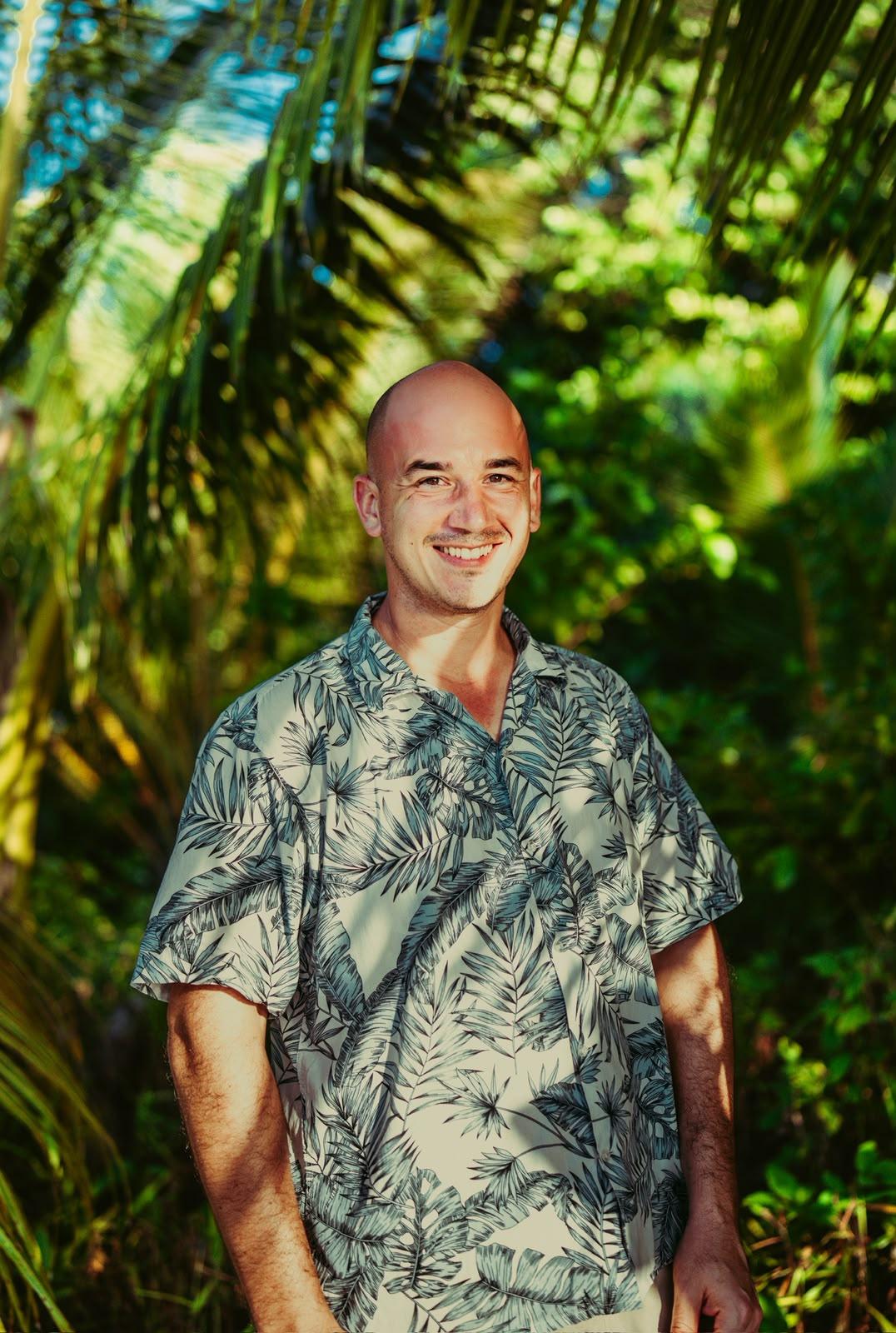 OCT10
Thomas
Despin
FOUNDER, RECONNECT
Protection × Return
WHO PAYS FOR LAND THAT MUST STAY EMPTY?Easier to raise a million than to lobby for it.
Thomas left Bordeaux on a bicycle and spent fourteen months riding across the world, meeting startup founders and writing their stories. He reached Indonesia ten years ago and has since become an Indonesian citizen. At the start of COVID he began building on Buka Buka Island, next to the Togean Islands National Park in Central Sulawesi. Seven years later Reconnect has 20 solar-powered rooms, a dive centre and 25 local staff, all living on site, and room for 40 to 50 guests. A second Reconnect is opening in Banggai.
He paid for it in three ways: his own money from an e-commerce business, investors who took equity, and villas sold Bali-style, earning their owners an income for fifty years. Of the island's 160 hectares he now holds about 25, bought plot by plot. His problem was the next million dollars. Half would buy out the investors who had agreed to exit after seven years; half would buy the rest of the island, to replant it and to keep it private. None of it would earn. He was already doing both out of the resort's profit, but too slowly, and every year the publicity that brings guests also brings a few people looking for land. One party resort on the island would change what he sells.
Ruling out the obvious routes
Thomas had already looked at the standard answers. A loan would mean heavy monthly payments on money that produces nothing. A nonprofit and grants would take time and energy he does not have while running the resort. Guests could sponsor trees at checkout, but nothing he had found covered the whole amount. He had even considered lobbying to change the status of the rest of the island so that nobody could build on it, and decided that raising a million would be easier.
The conservation work was already real. A tree-planting programme with young people from Ampana, working with the head of the conservation centre in Central Sulawesi, was running that weekend, and the team had recently released protected birds with the government and the national park. Thomas was clear that this was a learning curve with trade-offs, from lithium batteries to desalination brine, rather than a finished model.
There is a return, to the right person
Stephen rejected the premise. To the right person a reforested island is a substantial return; the question is who that person is. His first idea was to build a house on the far side of the island and sell it to a single primary sponsor, so the island stays private apart from one share. Christian took the same idea to the funder: look for people whose measure of return is not financial, such as an Indonesian businessman in Jakarta who wants an environmental image, or the Sultan of Brunei.
Thomas said the house was an option he had already explored. He had designed a villa that runs on its own power and desalination, so it could stand apart from the resort, at around $300,000. With half of each sale going on cost, he reckoned the million would take six of them, and wondered whether a larger villa at half a million or more would make more sense.
Many small funders instead of one
Stephen and Brad raised crowdfunding: donate a set amount and get a night at the resort, or a place in a raffle. Conor suggested GoFundMe, run with a conservation NGO and marketed digitally, which would keep the cost low. The idea was not taken further in the hour.
A field station rather than a fundraise
Brad drew on his own experience. Nonprofits spend most of their time raising money from foundations, he said, while universities with marine science programmes have endowments and run accredited field courses where students pay for the credits. He had worked as a teaching assistant at one such station, in San Salvador in the Bahamas, run with Ohio University, and had later run an accredited internship in Indonesia himself. That turns asking for money into earning it.
Christian combined the two ideas: the house becomes a research station, paid for by a university that wants an outpost. Stephen raised the target to two million, to leave room for a margin, and liked that it played to Thomas's strength, sustainable building. Living quarters around the station would create a second, separate part of the island, something that could be pitched to investors. Conor added that guests could visit the research, and Christian that a research presence would put a layer of protection over the whole area.
Where the session landed
Thomas liked the station and saw a selling point no one else in the region offers. He was candid that he did not yet see how it would attract that kind of money, having only worked with small investors. AJ suggested universities with large marine biology programmes, such as UC Santa Barbara, and others without coastal access that might want an outpost for their students, with a permaculture angle alongside the reef. Christian suggested finding a PhD student to develop the project.
Much was left open. No funder was identified, the station's costs and the time it takes a university to commit were not tested, and the investor buyout, half of the original million, was not worked separately. The hour also did not reach two of Thomas's own questions: what someone who funds empty land actually receives, and how the fundraising could run without him. Brad offered to call Thomas a week later as an accountability partner, and Christian promised a written summary.
Read the full transcript
Automatically transcribed from the live session and lightly tidied: trimmed to the show itself, with attendees numbered rather than named. The words are unedited, so the odd sentence is clipped.
Brad Wilcox: All right. So, welcome everyone. Thank you for for joining us. We're really excited for you to meet our guest tonight, uh, Mr. Mr. Thomas. And um one of the interesting things about this gentleman, he's I think I can, you know, speak for most of us on Earth and say that you probably haven't met that many people who own their own private island. Thomas uh our guest left Bordeaux on a bicycle and ended up as a founder
Thomas Despin: Oops.
Brad Wilcox: of of his own and now is purchasing his second in a private island in central Sulawesi. It's a resort. I I've been there and it's absolutely remarkable. I will also say it's,
Christian Nicolai: Stop here.
Brad Wilcox: you know, speaking in generalizations further that it's not what you think. Thomas has with his own two hands created the entire not just experience but to be uh one of the most comfortable islands whether it be in a city or you know in the middle of the jungle where where he lives you you would never know that Thomas has put together everything that he's about to hopefully give us
Christian Nicolai: This is cool.
Brad Wilcox: a little um you know understanding of of what he's done and what his family has built. And it's really a remarkable story and that's the one that Thomas is here to tell. And of course he's also bringing a problem too. So uh let's just um welcome welcome Thomas.
Thomas Despin: Sure.
Brad Wilcox: And Thomas if you don't mind uh just uh we'll go around the room and do a quick minute to talk about a bit about the week and introduce ourselves.
Thomas Despin: Awesome. Thank you.
Brad Wilcox: Yeah, welcome. Who would like to jump in? Okay, I'll pick AJ. Hey.
AJ Maxwell: Hey Thomas, so so exciting to meet you and looking forward to our next hour together.
Thomas Despin: Hello.
AJ Maxwell: So I I uh I I my background uh primar primarily
Christian Nicolai: Hey.
AJ Maxwell: was uh HR enterprise HR, largecale HR uh work across the globe. Um and uh now I help organizations really eliminate the the coordination layer um and uh identify
Thomas Despin: Heat.
AJ Maxwell: organizations um and help them through the learning curve, the change management side of it. So bring people together and uh align and and get things
Christian Nicolai: What?
AJ Maxwell: done.
Christian Nicolai: Thank you.
Stephen Nickerson: Nice.
Christian Nicolai: Nice.
Stephen Nickerson: I guess I'll go I'll go next. It's really nice to meet you, Thomas. After hearing a little bit about you, I'm like, I don't want to introduce myself. I just want to talk to you. I want you to talk. I uh I've solved problems my entire career. So I was a a fixer in for corporate um pretty much all automation integration corporate uh I don't know big big business stuff data data systems didn't talk together I'd make them talk together projects had failed I'd just come in and fix them um and I had a a a sniper team in my own consulting company that did that for a couple decades and so now I do AI stuff since since it came out I've been using AI to do
Christian Nicolai: That's
Thomas Despin: Awesome.
Stephen Nickerson: all kinds of cool things I little little buddies that work autonomously that do all my work for me. So, I took every single thing I know how to do and I taught AI how to do it so I never have to do it again. And so, I come here on this show to hang out with my friends and solve tough problems because it's fun and we get to help and give back. And that's what we're here to do today.
Christian Nicolai: Okay.
Thomas Despin: Nice to meet you.
Stephen Nickerson: Conor
Conor Sweeney: Thanks, Steve. Um, yes. So, Thomas, I'm from Ireland and much of my career has been in the Irish whiskey industry. Um, I don't recommend whiskey as a problem solving tool. But yeah, I had a a a nice 10 years, a decade in the in the whiskey business as an international salesman on the road traveling around the world. Um, I met Christian a couple of years ago and since then we've been running four steps to win a sales consulting training AI company.
Christian Nicolai: Happy
Conor Sweeney: Um, and that's how I got exposed to AI and um, yeah, it's been a really fun learning journey. I've been trying to absorb as much as I can from Brad and Steve along along the way,
Christian Nicolai: crap.
Conor Sweeney: which has been great. And yeah,
Thomas Despin: Awesome.
Conor Sweeney: I'm excited to hear what you've been up to and what you've been working on.
Thomas Despin: Nice meeting you. Come on.
Conor Sweeney: Thank you, Thomas. Should I pass on? Am I passing the button? Um,
Brad Wilcox: There's
Conor Sweeney: so Christian is up.
Christian Nicolai: Thanks. Thanks, Conor. Yeah, my name is Christian. I'm uh originally from Berlin. in now in Bali and in Indonesia since a couple of years traveling the globe since my grandfather told me when I was a teenager like travel before you get married. I started traveling I married and I traveled with a family and I continued to travel and uh um past family times now kids are grown up uh and um I have two careers. One is the uh one one is the sales consulting sales career helping enterprises to uh excel uh increase their um sales excellence and the other one which I've never monetized is a shamanic journey I've started in my early 20s with uh native American medicine people who have been inviting me to work with them and I've extended that career in parallel uh kind of uh one was visible, one was not visible and nowadays I'm bringing it a little bit more together. Um that uh career also crossed India for 3 years studying Tibetan Buddhism and um yeah all kinds of really cool stuff and I love to solve other people's problem because
Brad Wilcox: Cool.
Christian Nicolai: that creates good karma and other people are going to be solving my problems.
Brad Wilcox: That's very nice. That's wise and a good segue as well. So, this show is all about impossible problems. Thomas has one and we are about to to get into it. I I don't mean to defer or uh you know put any more provocations to the audience and the team. I just want to quickly touch base on last week where Santosh joined us and provide a little update there. He and I spoke midweek.
Christian Nicolai: There you go.
Brad Wilcox: he is obviously moving forward with with his project and purchased a domain that I just want to take a minute to see what you guys think about this. So first topic he bought a super intelligence
Christian Nicolai: Look at that.
Brad Wilcox: domains which is you know I don't know how you feel about that is if is it replacing
Stephen Nickerson: Yes,
Brad Wilcox: AI Steve yeah AI is out which is Antigua in the
AJ Maxwell: Yes.
Stephen Nickerson: 100%.
Conor Sweeney: Love it. Love it.
Brad Wilcox: Caribbean they were enjoying about 15 million in revenue from that little wave. So where is SI Singapore? Does anyone know?
Christian Nicolai: I have no idea.
AJ Maxwell: Sal I think it's some uh I thought it was some European country
Conor Sweeney: Slovakia. No, I don't.
AJ Maxwell: maybe
Stephen Nickerson: Nice.
Brad Wilcox: Well, whoever it is, whoever it is woke up like like they won the lottery about a week ago. Okay. Okay. Thomas,
Conor Sweeney: Well,
Brad Wilcox: uh, please tell us your story and over to you,
Thomas Despin: Hi.
Brad Wilcox: sir. Thank you again. And
Thomas Despin: All right. So,
Christian Nicolai: What is it?
Thomas Despin: am I supposed to read the document or I can just uh tell my story the way I Is it fine?
Brad Wilcox: you come as as you please.
Thomas Despin: Awesome. So, first of all, nice to meet you, all of you. Uh, thanks for having me. It's the first time I'm doing this kind of uh of show. I actually told Brad I'm in, even I had no idea what it was about. So, now I understand what it's about and I'm happy to be part of it. Um, so yeah, my name is Thomas. I'm originally from France. I've been in Indonesia for 10 years. I arrived there with a bicycle. Basically, I traveled the world on a bicycle for um 14 months uh with a project called startup cycling. So, I was meeting startup CEOs from around the world and learning from them and writing their stories. Made it to Indonesia and now I changed my citizenship for Indonesian citizenship for it's been two years I think now. And I've been working for uh the past decade on developing remote islands. um in a as sustainable way as possible. The first one is called Buka Buka Island uh in Central Sulawesi in the Togean Islands National Park. I mean next to it. Uh I've been doing this um since the beginning of co and uh now we have 20 rooms um fully solar powered. I even have air conditioning with the solar power uh Starlink Wi-Fi which more works uh most of the time I'd say and um yeah so should I talk about the problem now or I keep telling a bit more about what I do how does
Brad Wilcox: tell us more about you.
Thomas Despin: it work more about me okay so for the
Brad Wilcox: I mean I
Christian Nicolai: How big? How Wait,
Thomas Despin: past yeah of
Christian Nicolai: wait, wait. How big is the island? Can I walk around it?
Thomas Despin: course so the island is 170 uh sorry 160 hectares. I own about almost 20% of it right now.
Christian Nicolai: And if I walk around it,
Thomas Despin: Um you can walk most of it.
Christian Nicolai: how does it how long does it take?
Thomas Despin: There is cliffs in some sites so you cannot like go all around literally walking. Um but yeah, you can walk most of it. Uh you can cross it in 30 minutes. So it's pretty Yeah,
Christian Nicolai: 30 minutes.
Thomas Despin: 30 minutes.
Christian Nicolai: Okay, cool.
Thomas Despin: Yeah, depending on your physical condition. I save between 20 and 40. Uh you can also swim around the island. There's an official record of 2 hours and 26 minutes um held by a French guy called Rafi. And uh yeah, he's also the only one who did it. So that's the reason why it's the record.
Conor Sweeney: Okay,
Thomas Despin: So
Conor Sweeney: I'm I'm coming I'm coming for that title.
Brad Wilcox: I think it I want to say was there did you did you get
Thomas Despin: yeah
Brad Wilcox: there and there was nothing and now you have 20 rooms, air conditioning, a buffet, two boats, a dive center and how long ago did you arrive?
Thomas Despin: uh seven years ago right right at the beginning of co of course I didn't know it was COVID right it was right forth. Um so yeah um yeah we have 20 25 local staff now um all living on site. We can have up to 40 to 40 to 50 guests at the same time. Um full dive center. We have an instructor on site. So people come from around the world from 50 countries actually uh in total. I counted it and um yeah they stay usually one week to six months. We have people doing digital nomad here. Um Ryan, if he's watching the show at some point, I will listen to him. And um um yeah, I guess that's about it about the island. Um maybe you have more questions about it.
Brad Wilcox: Well, I've been there. So, I thought well, I thought a lot of things were interesting.
Thomas Despin: Yeah.
Brad Wilcox: I mean, just how well managed it was. I think a lot of your passion is is evident, not just in the stewardship of conservation, but it everything just really works, you know, all the time, which is a pleasant experience. um always but especially in you know on an island and on top of that in Indonesia and you know I just wanted to say there was something I noticed that was kind of clever and I think it's a good segue into the business operations side.
Thomas Despin: Mhm.
Brad Wilcox: So I saw that some uh there were some owners of some of your villas that are doing some kind of revshare. Do you mind talking a little bit about that? Maybe it's a good way to get into the problem that we're going to bring
Thomas Despin: Yeah. Yeah. Of course. So when I started I I used different ways of uh funding the project. Um the first one was to use my my own funds uh to initiate um everything. Um, I used to do drop shipping when I was in Bali. So, I basically bought the land with drop shipping money. Uh, which is kind of cool. And, uh,
Conor Sweeney: Thank you.
Thomas Despin: and now I stopped drop shipping. I had the choice between doing drop shipping courses or buying an island. So, I I went the island island way. And, um, I also raised funds. So, very basic, typical. I did the equity way. So, you get some equity in the project and and you get the profit sharing and so on. And um the different way we did for the past years was to sell some of the units. So more like a Bali style. So you buy a villa and then and then you you earned from this villa um for for the next 50 years. Uh so those are different different ways I I used um to still manage to um to finish the project even though you know COVID was pretty hard on uh uh hospitality businesses. So thanks to those ways of uh of raising capital, we we managed to um finish the resort in the way I I initially uh saw it and actually even better uh which was the limit was 20 rooms. I don't want to build like a massive resort with 150 rooms. I think it would make us lose um all the private island vibe. I think Brad, you can confirm that it's pretty like family eyes uh on the island.
Brad Wilcox: Yeah. Well, I was going to say too,
Thomas Despin: And
Brad Wilcox: I mean, your the beautiful piece of this is your family is there. I mean,
Thomas Despin: yeah,
Brad Wilcox: your daughter there,
Thomas Despin: we actually do live here full time.
Brad Wilcox: his wife is there. They live in the resort, but not in a creepy way, like actually like in a very nicely integrated way, just to the side of where everybody's living, but it's so homey. Like kind of like a homeay, but also a resort because no one notices that you're living there. And then you once you realize it, I mean, your daughter's already charmed everyone and won them all over by that point. But, you know, sometimes it uh like I remember an experience. I was at a hotel somewhere and the owner was living in the room next to me and I thought that was kind of weird. But like you have a nice big like beautiful uh life on your own, you know, in your own resort and it's really in harmony with your guests which I I found really, you know, really warming. So, I think you've done it well and I',
Thomas Despin: Yeah.
Brad Wilcox: you know, I just want to say I've never seen it. That's why I wanted these guys to meet you and um I'm sure you'll all come someday and and go to Buka Buka and visit. I hope. Yeah. Cool. So,
Thomas Despin: Awesome.
Brad Wilcox: any questions so far? Anyone from from the team?
Stephen Nickerson: No.
Brad Wilcox: Okay.
Stephen Nickerson: What's the What's the URL and how do you book a room?
Christian Nicolai: Oh,
Thomas Despin: What? Sorry.
Stephen Nickerson: I said,
Brad Wilcox: What's the URL?
Stephen Nickerson: what's the URL and how do you book a room
Thomas Despin: H it's reconnected ID.
Brad Wilcox: Thomas, I think there's one more piece to this that's pretty pretty cool that um you know the listeners should
Christian Nicolai: careful.
Brad Wilcox: should hear about. So you're also I mean we're talking about an island which is contained but also you're a big advocate for I would say even all of you know in Indonesia the coral triangle conservation across the archipelago but also specifically Sulawesi. Can you talk about um like I my wife says you're on Facebook commenting on on everywhere that anybody's talking about tourism, diving, you know, free diving, uh waste management, and you're involved in a lot of policies and governance and civic stuff. Do you mind uh speaking to that a little bit? I think it'd be interesting.
Thomas Despin: Yeah. Yeah. Sure. So, um so initially I I didn't know anything right about building islands and sustainable tourism and and all of this and uh it felt to me like all of those uh you know eco resort sustainable was like just a bunch of buzz words people were using to you know like as as as marketing. But then when I started to build the place, I just realized that um it just doesn't make any sense to build it in any other way. And I feel like one of the main things that um is is somehow leading humanity to like a very hard time in the future is that we um tend to focus on short term and and sacrificing long term And I try to learn how to do things in a way um that regenerating nature and doing things in a way that works long term is actually more uh profitable for everybody than just you know uh extracting and and just going for short term. So it's a of course it's a big topic and we could talk about this for hours and hours. Uh but we've been we've been trying to develop the island in this way and um I'm I'm still learning a lot and I I think it would be I stopped using the word echo resort 90% of the time. Um and I I just try to focus on the learning curve of like getting there because I think we're never there. Uh we use solar power but then when you use solar power you have batteries which use lithium, right? So like whatever way you decide to go like there's always a trade-off and you need to like um decide what you're comfortable with and and and you know uh what you um decide to accept and and and not um we we do the same for water for example we deselinate seaw water uh which use dalination pumps which are also powered with solar energy. Um but again the trade-off is you need you have some waste water which is not chemical or anything. is just like highly concentrated uh water uh highly concentrated in salt, right? So there's always trade-offs uh to whatever we're doing and we just I'm I'm still learning and I try to not having some like um you know position that's like okay that's the way we do and that's that's sustainable and this other way is wrong. So it's always like a learning curve and um lately we've been I'm sure you've heard of like the insane fires in Indonesia. I think it's almost a million hectares uh which burned down uh in the past three four months I think something like that. Um, even on the island, if you if you look now at the at the coast, you cannot you cannot see the the mountains and the hills uh because of the I think it's called a smoke or something like this in English uh because of the fires all around Indonesia. And it's been also a topic for us, you know, communicating with locals um doing tree planting programs on the islands uh to to um um to regenerate the forest ecosystem on the island, talking with locals, explaining to them why we should not uh you know burn everything uh to make it disappear and why there are better ways. So yeah, we've been working around around that and it's been a long journey and I think there's no end to this journey.
Brad Wilcox: Well said. Right. I'm I mean I'm tempted to jump into the problem, but I feel like maybe does anyone have any other questions before we do? We're about to go narrow narrower into this, but let's go.
Stephen Nickerson: Let's go.
Brad Wilcox: Actu Thomas.
Thomas Despin: All right. So the problem so with all of what I I I said uh which sounds great and I also forget forgot forget to mention that we're opening a second reconnect in Banggai which is also in Sulawesi and all of this sounds great but I still have problems and the one I decided to bring um tonight is I basically need around a million dollar um for different purposes um two mostly um and the problem is that this million dollar would not be an investment so it wouldn't bring a return and and that's the thing we need to figure out um together, I guess. Um so, basically, we have 20% of the island and I'd like to acquire the rest of the island um to make uh to run conservation uh programs on it to reforest the island um and and keep doing what we've been doing. So, we're planting trees, releasing uh protected birds, which we did a few weeks ago um together with the government and the national park. So, I would really like to acquire the rest of the of the island. So the other um 80% um not only for conservation purpose but also um because the private island vibe is something you lose if somebody comes tomorrow and open a resort uh next to us basically. So so um basically that would be um one thing uh part of the problem. Sorry I'm not used to talk and read at the same time. So um
Christian Nicolai: Take take a minute. Take a minute to read.
Brad Wilcox: Yeah. Yeah.
Christian Nicolai: Take a minute to read.
Thomas Despin: okay. Yeah,
Christian Nicolai: Um and let us let let us think about it. Um uh uh while you read it and collect your thoughts.
Thomas Despin: sure.
Christian Nicolai: Um a million dollars with no return. It's kind of a big package, right? Um, but is the million dollars the problem?
Thomas Despin: So I mentioned I mentioned part of it was to buy the rest of the lands on Buka Buka Island. The other half is I mentioned I have investors right who invested in the project some in the beginning some later on. And I wouldn't need the other half to um exit those investors who already are uh already agreed to exit the project because they've been together with me for seven years. uh we went through COVID and all of this and now is a time where uh we reach like the full size of the resort and there is a good time frame and actually the ideal time frame uh for me to offer them to exit right now. Uh and at the same time the other half of this million would be used to acquire the rest of the lands uh on the island, right? And as I mentioned uh none of this money would generate any revenue u immediately. um doing it with a loan would mean like huge payments monthly and I don't think it's u it's ideal. I've played around with a few ideas um such as offering guest or building a nonprofit and and somehow getting grants or stuff like this. Um specifically for the conservation programs um so to acquire land and have uh tree planting programs of course that requires like a huge amount of time which and energy which I uh most likely don't have uh right now but those are options that um I think are interesting. Uh we could also offer guests during the checkout, you know. Um if you want to, you know, help us, you know, keep this product going, you can like sponsor some trees or, you know, whatever. Those are options I um I explored, but I haven't found like one thing that would just like solve the the whole thing from from A to Z, if I can say um in in this way. And of course the the option to buy um the shares of my shareholders and buy lands myself are things I'm already doing. It's just that it takes time because of the re the current revenue of the of the resort and the profit level uh which are at the best we've been so far which is great uh every year it's been growing uh especially since the end of COVID but it's still not enough so that you know tomorrow or even in one or two years I can say okay now I have enough to both buy the investors out and buy the rest of the island. So I've been doing it um every year I keep buying land. So we started with 1.5 hectares out of the 160 of the island. Now I have about uh 25 something hectares uh which is great. Uh this year is the year I bought the most amount of land. So it's definitely going like the right direction and I also bought out some of the investors um um starting from two years ago and until now. uh but again it's going a bit you know too slow and now it's uh we have a really good um uh momentum for the exit of the investors if I compare the current value of the resort what they could expect out of the shares and where the projections are going revenue wise u if I can say this way and for the lens the urgency come from the fact that uh it's actually ironic but the more we have guests and the more exposure we get the more we also have people coming to the island you know, looking for that, right? So, it's some kind of like, you know, um, double-edged sword. So, we want to have more guests so we have more revenue and so, you know, everything works better financially and I can buy some of the episodes out. But at the same time, the more we uh talk about the island, the more we get like every year we get a couple people coming trying to find land. Um, fortunately I have this advantage which is I'm I'm really well integrated in the community and usually everybody who wants to sell a lens uh usually talks to me first. Uh but it's like a very u fragile uh balance uh I would say because if tomorrow somebody gets like a plot of land on the island, it could just totally change the experience of our um guest and our vision um over time. So yeah,
AJ Maxwell: So Thomas on on in terms of the the purpose of the the land um is it just to conserve um you know conservation? Um I'm just trying to when you say there's no uh return on the investment for you know the monies will that land just be protected or what's your vision for the future of that land
Thomas Despin: Yeah, that that would be the goal. Um, of course the logistics of doing conservation program if we don't want to you know use buzz words and say hey it's conser but if you actually want to replant it of course it takes years uh but it starts with the lens. So the goal would be to fully protect this land and to replant native trees, fruit trees. Um we actually have for the first time we call it Bakti Hijau which is um I don't know how to translate actually in English. So bakti is like when you work for for free for a good cause and hijau is great. Uh so we have uh 10 10 young people from Ampana who came yesterday and we do we do the first session actually at the moment uh from yesterday to tomorrow uh and they're planting mangrove kapang like a boron hutan like a jungle trees which we find already on the island. So the goal is to use native trees we already find they go in the jungle they find like the seedlings and then we we uh put them in the northern end. So it's actually we have the first session uh happening at the moment and we did it with the head of the conservation center in Central Sulawesi. So that's that was a great trial and now I I I really understand like if we want to plant 10,000 50,000 trees over the next years we first need a lot of land but also a lot of uh um people and and funding to also do the planting. So it's not on both ends.
Christian Nicolai: Um like you you you you are talking about like if somebody comes in on the island uh and build a karoki or whatever you said right like uh um like a sec separate resort are you the only one who's losing something or your guests or are there other I don't know like um uh fishermen or uh conservation People who have the same interest as you have.
Thomas Despin: Um, I say if somebody else come and open a resort, it's probably going to be good for the fishermen if they can sell more fish or, you know, things like that. Um there is no not yet any conservation um interest from other parties.
Christian Nicolai: Good.
Thomas Despin: I'd say um actually that was one of the ideas I had was instead of buying the lens I could change the status of the rest of the island and make it impossible to build. Uh that's a lot of political lobbying to do,
Christian Nicolai: Yeah.
Thomas Despin: especially in Indonesia. I kind of understand how it works now. Um and I decided that's not the way it's not the easy that's actually easier to raise a million than doing this, I think. Uh but that's the part of the options. Um so to to go back to your question I don't think there is any other parties who would lose something if somebody come and open a resort and actually don't think that it actually in if I zoom out um you know it's not necessarily a bad thing that other resorts are on the island. It's just that because what we sell is the privacy and the fact that there is nobody else on the island then we would need to change our like our entire angle and you know the way we share about the resort and it's a different positioning and so on and there is the risk that you know if it's somebody who's like like Brad is coming tomorrow and he's opening a resort it's amazing we do it together we will collaborate and we will find out um if it's a somebody else with different hobbies and center of interest uh who open like a totally different concept that's more like a party resort or something. That would completely destroy what we what we intend to do.
Brad Wilcox: Well, the other side is the conservation too. I mean, zooming out again from the dive community or the, you know, global conservationminded community, you have the center of the coral triangle's optimal biodiversity for marine species. And I'm I'm sure even like you there's tarsus monkeys around. I mean, the Togean is is a basically tropical rainforest as well, right? And and so top side also on the reef, I mean beautiful, very thriving and healthy coral reef ecosystems are are there. And anyone who knows that scientific side of the biology,
Thomas Despin: Mhm.
Brad Wilcox: you know, speaking from science and from conservation and also d the dive industry, which is I don't know how many billions of multi-billion dollars that businesses, but I think people come back to your resort also because of how healthy the marine ecosystem is. And so you're kind of the steward for that because no one else is there. And so we've seen, you're right, sometimes when a couple of resorts that are of the same mindset, it it can also be a partnership like a collaborative conservation effort because there's a lot to do as well to take care of a giant thriving ecosystem or at least protect it, right?
Thomas Despin: Please.
Brad Wilcox: Like more protection than take care more get out of its way and not leave, you know, too much chaos in your wake when you're there. But sometimes uh it can it can really change it very quickly. like if the wrong, you know, if the wrong mindset is there. So, that's what I really love about it. It's really one of the most beautiful. You get underwater and you're like, whoa. Like, there's a couple of secret, you know, reefs and it's so uh new that Thomas is still naming the dive sites. They sometimes do expeditions to find new dive sites and you just get to name it, you know, whatever you come up with on that boat trip because it's so new. I mean it's like there's there's the first guy there is he and his family you Button.
Thomas Despin: Yeah, maybe just to give a bit more context um because the the way you share it uh is is amazing. It just sounds like it's only us in the whole national park. So, I just want to add a little bit uh more context. So we're on Buka Buka Island which is the closest island from uh from the mainland from Ampana it's called uh and then at the top there is the Togean Islands which is a national park. Um and in this national park there is also other resorts. Uh it's like about 45 minutes to two hours from us depend depending where you go inside the park and there is about 20 to 25 um small resorts also in this national park. So it's not only us in the entire uh archipelago um just to to be more precise with the context but it's only us on Buka Buka Island and what what is happening is because we offer the highest um level of comforts uh and standards in the whole region. A lot of guests now they come to our resort and then we organize day trips to the islands and then they come back to our resort. Um so so we get like a a market that wasn't there before. The toen islands were um mostly known for uh backpackers, you know, on on a very tight budget and they were just going in in on a small boat from one island to another. And now because of the different standards we managed to um bring in the region, we we have people um who you know uh have different expectations. Uh they need air conditioning in their room. Uh like they have different expectations for food, they want to do expeditions. uh they want different standard from like the diving they they want a certain quality. So even though we're not like a high luxury I think we're like maybe middle plus but in the region uh it sounds like we are at the top because of the rest of the offer. So our focus with what we offer is to keep increasing the value instead of increasing the number. Uh so we don't want to have more rooms uh necessarily but we want to increase the value uh of the service uh we we provide to the guest. So that that was just for a bit more context of like how it works.
Brad Wilcox: Yeah, it's good. I think it's time for us to start thinking and fixing this problem. I can see Stephen's brain. It's got like lights working above his eyebrows there. What you got for us?
Stephen Nickerson: Well, yeah. Well, I don't I don't I'm not buying the no return. I I think uh I think there is a return but it's all about how you position it because to the to the right person a fully reforested island is a pretty big return. To the wrong person it's nothing. So from a financial perspective yes of course that's not a return but to bring a piece of the planet back um I think there's people that are interested in things like that. What's and I'm wonder what what I mean the obvious solution right is is to uh is to build a million-dollar house on the other side of the island right and build it build it and sell it and then that solves the problem uh sort of except you're a private island except for uh one uh call them a primary sponsor and make them part of the resort with one with one share and now you still have a private island. Um, so you don't have to change your wording. So I think there's I mean there's that. It's not my favorite option that I'm thinking about, but that was the first one that came to mind anyway.
Thomas Despin: Okay.
Christian Nicolai: I mean I I I I I I'd like I just want to say I had the same thought. I was thinking of uh Richard Branson, you know, uh he was he was he was flying through my mind.
Brad Wilcox: Totally.
Christian Nicolai: Um and totally and there will be a Indonesian Richard Branson. Um and the question is like is the money coming from one person or like is the money coming coming from like little amounts from many people? uh um uh or is it a combination um so if we detach from this uh revenue and I agree Stephen uh uh this return there's always a return if I do something the question is like uh how do I where do I have my KPIs and I need to identify ICPS uh for finances uh who have their KPIs on noninancial returns uh and And uh it's just a question of uh how how much work do I put in and how much intelligence do I put in to identify uh the amount of ICPS or like I uh finance profiles uh and then go look for them. And um I I I love the idea uh of that of that uh one house. Um right could be an underwater house also. Uh, by the way, um, who um um,
Brad Wilcox: May maybe Richard Branson wants to move to Indonesia.
Christian Nicolai: no, no, I mean, I wouldn't I would I would look for the Indonesian Richard Branson because there are plenty of those guys around here who have a lot of money in Jakarta, uh, and who on island. I know I've I've a few years ago they were passing across my I don't know what uh but um to to find somebody in the government who um say yeah that would be a project for me um uh not only I'm coming from that area I have a relationship or whatever I like to just to do that I need an image I I need an image image could be a KPI. I need the image. I need an environmental image like
Stephen Nickerson: Mhm.
Christian Nicolai: uh just image, you know, and and and for that I put money in and and and a million is nothing for me. Uh um uh but I get that environmental image in Indonesia right now, especially with all this s*** was happening in In Borneo uh like burning forests uh and uh like extracting the earth um with mining mining activities um yeah and then you have also like you have the the Sultan of Brunei. I mean like he's for him a million dollar is uh like pocket money. Yeah.
Brad Wilcox: It's pretty smart. So, Stephen, you had the house. You're building on the house with the rest of the strategy, Christian. It's pretty clever. Moving in the right direction.
Stephen Nickerson: Yeah, I think there's he already said this. I'm the idea of crowdfunding this where it's like help me buy an island and you own a tree and you get to spend a night for free. So, every person who invests, you know,
Brad Wilcox: Yeah.
Stephen Nickerson: who not invests, wrong word, um, who donates up to a $100 or more gets one night at the the at the resort or something like that or this or gets put into a raffle for it,
Brad Wilcox: Yeah.
Stephen Nickerson: something along those lines. You guys must have already thought of that.
Brad Wilcox: Kickstarter. Kickstarter. I mean, it had its its decade, right? And I think people are still doing Kickstarters. I've seen for health issues. I'm sure conservation is top three causes on Kickstarter. Are are have you guys seen any good Kickstarter campaigns lately? Anyone? this kind of thing, crowdsourcing or
Conor Sweeney: Yeah,
Stephen Nickerson: Amen.
Conor Sweeney: that that's what came to my mind was like gofundme um and maybe teaming up with a conservation like it's about marketing then marketing the uh the concept and the conservation um and maybe collaborating ating with a conservation um NGO. I feel like that could could generate.
Christian Nicolai: Good point, Conor. Good point. Good point. Really good point.
Conor Sweeney: Yeah.
Christian Nicolai: Like
Conor Sweeney: And you can do it digitally. I feel like cost can be low and then you're also like how does the how does the feeling of the house or how Does the idea of the house resonate, Thomas, or like are you is that a non-negotiable? Like nobody else is is taking ownership.
Christian Nicolai: Oh yeah.
Thomas Despin: Um actually the idea of the house is is one I uh I explored I I have actually this concepts of um you know the resort is 20 rooms right and because we have our own solar and and uh water production in one place uh if I want to add something over time it feels like crowded right but I have this concept I developed of
Christian Nicolai: Is it?
Thomas Despin: um a villa that is fully sustainable by itself. So it has its own power and the selenation unit um it can even work with a with a swimming pool uh with the with the numbers I I run for the for the capacity. So it's definitely something that that's an acceptable option. I think it's a something I I I we could do. So we have the resort and we could have like like separate houses in other parts of the island so we don't have like these crowded feeling of like you know safety rooms in one place. Um and also the goal which would also be a personal challenge for me which is like to what type
Christian Nicolai: Yeah.
Thomas Despin: of standard and quality I can reach uh when building on this island because every building every new building we we try to do I I try to also like increase the the type of standard and quality we we try. So there's like a personal challenge also to it. Um a million dollar house probably cost 40% of that.
Christian Nicolai: What the s***?
Thomas Despin: So it would be two houses.
Stephen Nickerson: Yeah.
Thomas Despin: Uh but I I guess I guess that um that's still work.
Brad Wilcox: Stop.
Thomas Despin: I saw things smaller. The concept I I've imagined is for a $300,000 um villa. So with like a 50% cost that would be like six of those I
Christian Nicolai: audience.
Stephen Nickerson: Mhm.
Thomas Despin: guess uh which might be a lot. So maybe the angle would be to take the concept I have and just try to just make it
Christian Nicolai: I do
Thomas Despin: like half a million or 600,000 maybe. But this idea is it's it's totally um totally uh possible I think.
Christian Nicolai: I I like to go back to Conor's idea, Conor. I really like that idea, this conservation and and and and scientific whether I I did I understand that right? Correct. Uh this this research about uh that area.
Conor Sweeney: No, I think that's your idea now, Christian.
Christian Nicolai: Okay.
Conor Sweeney: I can't I can't take credit for it.
Thomas Despin: It's not
Christian Nicolai: I I just I heard it. I heard it.
Brad Wilcox: That's a good idea.
Christian Nicolai: I mean I heard it.
Conor Sweeney: I I won't But I like it.
Christian Nicolai: I I I heard it because because you know like like Sanjay's niece uh Vivek's daughter she's actually like a PhD in in that kind of a subject in uh North Australia and doing this kind of uh uh uh research uh uh on on on on topics like that.
Brad Wilcox: and kids.
Christian Nicolai: So if you uh put a research project out there from one in university, uh uh uh you you get a kind of a already coverage like protection layer
Conor Sweeney: That's cool. Yeah.
Brad Wilcox: Yep.
Conor Sweeney: And and researchers are probably nice or I I have a feeling they would be nice guests to have around.
Christian Nicolai: like especially female researchers.
Brad Wilcox: Well,
Conor Sweeney: Uh,
Christian Nicolai: Yes.
Brad Wilcox: and yes,
Christian Nicolai: For me for me I mean from my side
Brad Wilcox: I I agree. I also agree that I won't uh I want to say two things. So, on that. That'd be like a field station. And if you're talking North Australia, maybe you're thinking Australian Institute of Marine Science. Um, and they have endowments, right? Like Rosenstiel School of Marine and Atmospheric Science is one. You've got in the other side of the US in California there's um oh gosh in uh anybody know the name of that place where oh Monterey Monterey Bay has a marine school and they I mean like the rest of the schools as opposed to a nonprofit nonprofits remember now we're in the second option they're raising money 80% of their time from foundations So they don't have the money to do this, but they could partner to raise the money. But then you're back in the same wheel, you know, with writing proposals, RFPs, which is possible with AI because we should talk about that or super intelligence in this show. So I did want to just say those two things um AI could help a lot with. And on the field station side, you guys are absolutely right. Because of the endowment and because there's less uh leads, right? There's only on two hands, you can count all of the marine schools that might possibly be interested in having a science research site of their own. Yeah. On the nonprofit side,
Conor Sweeney: Yeah.
Brad Wilcox: there's a lot and it's, you know, a lot of RFPs. Yes, sir.
Thomas Despin: I have no idea what you guys are talking about. Can you explain like
Brad Wilcox: Yeah. Yeah. Yeah. I think we're on to two new options besides your
Thomas Despin: angle, the building vas angle, but the research thing? I'm absolutely lost.
Brad Wilcox: So there's like a place in the Bahamas called San Salvador.
Thomas Despin: Okay.
Brad Wilcox: They have they have partnerships with Ohio University. Um, and every summer there are accredited summer programs where the university brings students down to that site. I used to be a TA there and and a couple of,
AJ Maxwell: Come on.
Thomas Despin: Okay.
Brad Wilcox: you know, marine biologists come down with their class. The students are paying for the credits to be there. they earn income as opposed to the community-based side which is always just writing some proposal to Ask for money. So where's you know there's two sides of this. Ask for money or generate revenue. So one way you can generate revenue is sell a house. Another way is open a field station and conduct research activities, science, marine science programs that are paying students who come and stay. Another second benefit is they could stay maybe in a different accommodation or what you have but probably a little more dorm style I would guess. And you know, you have like a a season a season of them because they're usually in class and it's summer or a spring break and you just get all these students and you get a check.
Thomas Despin: Okay. So, they pay for the accommodation. I don't understand the numbers on the other part because I've never seen or done anything like that before the research part.
Brad Wilcox: Oh, you mean on the nonprofit? Yeah,
Thomas Despin: So you say they come,
Brad Wilcox: because they're PhDs.
Thomas Despin: right?
Brad Wilcox: So they're they're they're uh students who are undergoing their candidacy for a PhD in marine science and they have to come and do the research in the the most beautiful place for them to study which is your front and backyard because they
Thomas Despin: Okay.
Stephen Nickerson: And how does Thomas get how does Thomas get paid for that?
Brad Wilcox: they pay six credits. Each credit was uh I actually ran this model. This is how I got to Indonesia. I ran a nonprofit. But I I quickly learned that it was impossible to go around asking for money all the time. Plus, it's like pretty lame, you know? You're like, "Give me some money. I can't do anything unless you give me money." So, I figured out you have to actually make money. So I started an accredited internship mostly with
Thomas Despin: Oops.
Brad Wilcox: Europeans and they came and did alternative livelihoods with people like Thomas and they got six credits from their summer class.
Stephen Nickerson: Um,
Brad Wilcox: They had a great experience and they were scientists some of them like some of them were just hanging out hooking up the whole time. I mean didn't do anything but I was trying to provide you know some structure to micro entrepreneurship experiences in Indonesia and Thomas would have more of the maybe you could do that if somebody wanted to get into your finance or maybe do some website development with you. I mean Thomas has batteries uh saline power I mean desalinator you know all this cool stuff that people can study engineers scientists yes does that make sense
Christian Nicolai: Why don't we Why don't we build a house?
Thomas Despin: Super
Christian Nicolai: The the the house is not the house but the house is the research station and the funding comes from a a university uh uh who is uh needs an outpost and who is interested in conservation. activities uh and that will give the island an additional value. We are not only providing the experience of being alone, we are providing an experience of being part of a conservation project uh uh in the area. So, uh, uh, officially, uh, acquire Indonesian university to build the $1 million house, uh, on your island to do an outpost for research.
Stephen Nickerson: Yeah, it has to be a $2 million house because only half of it's profit. So, but what Yeah.
Brad Wilcox: Yep.
Stephen Nickerson: And what I like about that,
Thomas Despin: Hello.
Stephen Nickerson: what I like about that, Christian, is that building sustainable building and sustainable living is Thomas's expertise, right? So bringing a solution that fits 100% into his wheelhouse and his expertise, to me,
Thomas Despin: Heat.
Stephen Nickerson: that makes the most sense because the one thing he knows how to do on that island is build a sustainable building. And if I really like the idea of a of a large scientific outpost probably on the other side of the island that that provides this
Conor Sweeney: Yeah.
Stephen Nickerson: this beautiful sanctuary where you wouldn't normally find a beautiful sanctuary and it's focused on sustainable living, conservation, you know, in the jungle on an island. I I think there's there's probably something pretty interesting for people to study there. Um,
Conor Sweeney: Yeah.
Stephen Nickerson: but no,
Conor Sweeney: And maybe for sorry go ahead Steve uh may maybe like an
Stephen Nickerson: you go
Conor Sweeney: attraction as well for for your guests some like if some if people want to learn about the
Thomas Despin: Yeah.
Conor Sweeney: biodiversity learn about the research that's going on um yeah that's an added value it's an extra activity could also be an income for the research facility um yeah I really like that idea
Thomas Despin: Yeah,
Stephen Nickerson: Well,
Thomas Despin: that makes sense.
Stephen Nickerson: and I think it would make sense for for there to be a small living combination around the facility as well. So, you would end up with you would have expanded effectively expanded your resort to two different parts of the island.
Christian Nicolai: Thank you.
Stephen Nickerson: So, they're completely separate and not reliant on one another. It's funded by a large institution, but then the living quarters are all around it like Brad like Brad said. and you manage the entire thing. So, it actually does return an investment and now you have something that you could pitch to an investor um even in normal.
Christian Nicolai: And yeah and you will spread out that if you if you get that you will you will create a protection layer over the area.
Stephen Nickerson: Yeah. The whole area. That's right. Yeah.
Christian Nicolai: It's not only the island, the whole area.
Thomas Despin: Yeah,
Stephen Nickerson: I like that.
Thomas Despin: I like the idea of um of building a center. I don't know if actually that's something that could attract a million or this kind of uh of money at all. I like the idea because I I understand it. I also still didn't fully understand what Brad said about the credit and but I understand it slightly better, but I guess because I didn't finish university, I don't really understand how that works for PhD and so on. But I feel like it's a good idea. I just don't fully understand the details of what uh Brad shared. Um but building a scientific outpost uh like science outpost on the other side of the island sounds like a great idea. um feels like it could work with what uh Brad shared earlier with the programs and that's that's all I understood. So some people come to do some research, right? I just didn't understand fully how it makes money besides the fact that they stay on the island and they pay for it. Um and I like the idea that we could connect the two like they could go from reconnect the resort and just go to the like the outpost and on the other side of the island and just um like learn about the research that is being done. I think that's a really cool um thing to sell that nobody else is selling um so far as I know in the region. So that's also like a really good selling point for the resort itself. So I see some synergies around that. Um yeah, I just don't at this stage, but I guess it's like there's like a whole journey starting from an idea to realization. I just don't yet fully see like how it attracts like this type of funding. Um, again, I've never worked with like big institutions. I've only worked with u small investors. So, this is like a new world for me. Um, which yeah, I'm ready to learn. Um, but it seems like you guys understand it much better than me.
Brad Wilcox: That was that was perfect timing to sum up uh what what we were talking about in terms of the problem. And we're almost out of time, but I think it's just the beginning of the new idea. And I don't know what the sales cycle of a university buying a field station in
Thomas Despin: Oops.
Brad Wilcox: Togean is, but we'll help you find out after the show.
AJ Maxwell: Yeah. Well, I think there's uh you know the California and the US California University system like Santa Barbara University of Santa Barbara, they have a huge marine biology research kind of component and you tapping into that knowledge. Maybe there's other universities that don't have access to marine that like you said, University of Ohio, Ohio State that they want to have some kind of outpost as kind of a marketing and in opportunity for their students. So
Brad Wilcox: Yeah.
Stephen Nickerson: It's I think it that ties into what Christian said earlier, too. It's like which university wants to have that badge that says we're studying conservation, marine conservation, and we bought and and protecting an island at the same time.
AJ Maxwell: yeah,
Stephen Nickerson: Like, who wants that badge? Because
Brad Wilcox: Is the news AJ
AJ Maxwell: the permaculture and I think the per the permaculture angle as well, you know,
Stephen Nickerson: Yep.
Brad Wilcox: Great.
AJ Maxwell: we there's there's a opportunity in terms of planting and indigenous uh fruits and that kind of thing. That's that's super awesome.
Brad Wilcox: I was wondering AJ and and Stephen, are you guys seeing any news about these fires in Indonesia over in like in Canada and the US?
Christian Nicolai: No,
AJ Maxwell: No.
Christian Nicolai: they don't they don't know anything.
Stephen Nickerson: Nope.
AJ Maxwell: Yeah. No, I haven't
Christian Nicolai: It's not it's not broadcasted.
Brad Wilcox: It's not. I was going to say I don't think it even makes the news in the West, which is really something because Okay.
Thomas Despin: Interesting.
AJ Maxwell: Yeah,
Stephen Nickerson: Yeah.
Christian Nicolai: And and I would I would I would I would I would think about it, Thomas. If you say, "Okay, I have no clue what Brad was talking about or how this going to work." Uh I would find a PhD student from any international university to give them a project to develop that project.
Stephen Nickerson: Yeah. Yes.
Christian Nicolai: And we can use AI to find that guy or that lady.
Brad Wilcox: Yeah, we'll help you find that one.
Stephen Nickerson: Excellent.
Brad Wilcox: I'll be happy to. I think this is a great initiative and I would be happy to do anything that you want to put me to to to help you turn Buka Buka Island into a conservation area. I really would. So,
Thomas Despin: Awesome.
Brad Wilcox: let me know and we will follow up with you to hear what you're thinking about on this topic or anything new that comes to your, you know, comes across your desk. And, uh, we're, yeah, we're we're happy that you came to join us today. And I know you were taking care of a lot of guests at on your on your island at at your resort. So, and also your family. So, thanks for joining us today, Thomas.
Thomas Despin: Thanks for having me. It was that was really fun. Um, how does it work from now? So like we wrap it up now and then like we follow up later on and we keep working on it. Is that is that how is that done?
Brad Wilcox: Yep. I'm going to give you a call in and in like a week and see what you're thinking about.
Thomas Despin: Awesome.
Brad Wilcox: See if there's anything new that came up. If not,
Thomas Despin: Okay.
Brad Wilcox: uh just have a couple of questions together and see if any of this sticks and what you want to do about it next. So, we're like your accountability partner.
Christian Nicolai: Yeah.
Thomas Despin: Awesome.
Christian Nicolai: And and we will we will create a kind of a summary of a solution paper what we have discussed and we will provide that to you also in the next couple of days midweek or something.
Brad Wilcox: Yeah, it wraps up everything. Yeah,
Thomas Despin: Amazing.
Brad Wilcox: it's a nice a big report on just these ideas with more it's more enriched on like following through on these on these ideas. Yeah. Yeah. Yeah.
Thomas Despin: I'm good.
Brad Wilcox: Cool. All right. Well, thanks. Thanks so much everyone. Appreciate you all for listening in.
Thomas Despin: Thank you.
Conor Sweeney: Yeah.
Thomas Despin: Thanks a lot for your Okay.
Conor Sweeney: Thanks a lot,
Christian Nicolai: See you.
Stephen Nickerson: Yeah.
Conor Sweeney: Thomas.
Christian Nicolai: See you on your island.
Conor Sweeney: Yes.
Thomas Despin: See you soon.
Brad Wilcox: Please,
Stephen Nickerson: Take care,
Conor Sweeney: Take care.
Stephen Nickerson: guys.
Brad Wilcox: the link the link to Buka Buka and Reconnect will be in the
Conor Sweeney: Byebye.
Brad Wilcox: comments.
Christian Nicolai: Thank you.
Conor Sweeney: Yes.
Thomas Despin: Thank you guys.
Christian Nicolai: Cool
Conor Sweeney: See you there.
Stephen Nickerson: Take care,
Thomas Despin: I appreciate.
Conor Sweeney: Bye.
Stephen Nickerson: guys.
Conor Sweeney: Bye.
Thomas Despin: Goodbye.
Need funding for something that won't pay it back?
Tell us what you're protecting, how much it needs and why the usual routes don't fit. We'll work the problem in the open.