
WITH BRIAN PETRO
When Experience Stops Getting Hired
Brian Petro talks every week to people with decades of senior experience who apply for jobs and hear nothing back. He thinks the root is ageism, and that it is not only their problem.
If AI takes the repeatable work and leaves the strategic work, the people best placed to do the strategic work should be in demand. Instead many of them are pushed out, turn to fractional work they were never trained to sell, and struggle.
Listen onApple Podcasts Spotify
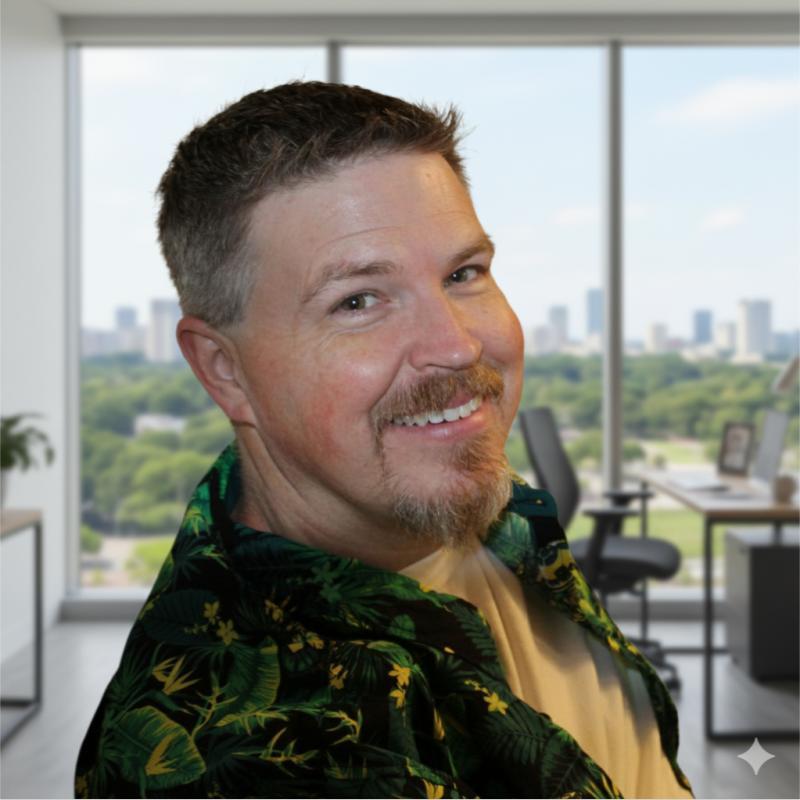 OCT17
Brian
Petro
BUSINESS DEVELOPMENT FOR CONSULTANTS, BRIGHT PRODUCTIONS
Experience × Hiring
WHO HIRES THE PEOPLE AI SHOULD NEED MOST?Not my problem. Our problem.
Brian has been self-employed in marketing and sales for more than 30 years, running his own marketing company for clients from Chevron and Merck to very small businesses. Four years ago he moved from an agency to consulting and fractional work, hit the wall every fractional hits, packaging, pricing and selling himself, and worked his way through it. Today he does business development for consultants and fractional executives, and he has talked to hundreds of the people behind this problem.
He described them as mostly Gen X, in their mid-fifties, reorganised out of a job, with ten or more years of work ahead of them and in some cases three children in college. Applying for jobs has turned into one AI submitting forms and another AI filtering them, and most of them do not even get a no. So they turn to consulting or fractional work, which suits decades of senior experience, but most of them have never marketed or sold themselves. Brian helps some of them one at a time. The question he brought was bigger: if AI takes the repeatable work and leaves the strategic work, why are the people most ready for the strategic work being thrown away? He was clear he did not know the answer.
Applications against relationships
Brian had tried the job market himself, spending months on applications and with executive recruiters, and rarely reached an interview. Stephen, an engineer, said that picking up the phone had always worked for him, and that the uncomfortable answer is still to call people and to write to them as a human rather than letting AI write the email. Brian and AJ agreed that executive roles are rarely filled from job posts: they go through networks and relationships. AJ's had come from former bosses and colleagues and from recruiters.
On executive recruiters the panel was mixed. AJ had seen the best of them act as a trusted bridge to a CEO. Brian found them kind but unproductive: they are paid only on a placement, at a fee a hiring company is reluctant to pay, so few truly senior roles reach them. He added that technology is the industry where he meets the most people who are broken and scared.
Working for yourself, with AI as the leverage
Brad told his own story: he saw his own firing coming at a startup, taught himself Claude Code from YouTube without being a developer, and started his own agency on fifteen years of product experience. He offered it not as the answer but as an option, since domain experts now build products. Stephen pushed it further, arguing that someone with deep experience can learn to build almost anything, and asked whether a fractional role is really what they want to bring into the world.
Brian pushed back on two points. Most of the people he talks to do not find fractional work an easy way to make money. And if, as Stephen said, an AI agent can do the strategic work of a CMO, then the strategic work is not safe either. Stephen answered that experience still makes the decisions and AI accelerates it; Christian added that consumer AI tools produce work at about 80 percent of professional quality, and the rest needs someone who understands them in depth. Brian also questioned the idea that everyone can find work they love, recalling his grandfather, a dairy farmer, who said you only need not to be unhappy in your job.
Abundance as the source of resilience
Christian argued that the problem and the answer are inside people: believe in your ability to create value in an economy that keeps growing. Brian agreed that an abundance mindset is essential to making it on your own, and named the difficulty: it is hard to see abundance when you are broken and afraid. Stephen described a friend who used an AI guide to work on himself and doubled his income in six weeks, and Brad suggested role-playing a feared interview or sales call with AI first.
Brian shared a working example of his own method. A man he had once spent an hour with on no-pitch LinkedIn networking set up a consumer AI agent to run part of the process, and told Brian the day before the show that it had brought in six figures in six months.
Where the session landed
Brian's takeaway was the mindset: with an abundance worldview you have the resilience to take the no's and keep going. With a 25 percent close rate, three no's are part of getting to a yes, but without that resilience each one is crushing. He acknowledged that saying so does not give it to anyone.
Much stayed open. The session did not reach the structural side of the problem, ageism in hiring itself, and worked mostly on what an individual can do. Stephen raised an AI-run fractional C-suite firm whose purpose would be to win work for displaced fractional executives, and he and Brian agreed to talk after the show; nothing was decided. AJ promised a written method document.
Read the full transcript
Automatically transcribed from the live session and lightly tidied: trimmed to the show itself, with attendees numbered rather than named. The words are unedited, so the odd sentence is clipped.
AJ Maxwell: All right, well, I'll go ahead and get this kicked off. Good morning and welcome to the integrated intelligence show, Five Minds, One Breakthrough. I'm AJ and I'll be moderating this morning. So let's do a quick round, one minute each, guys. Brad, how about you go first?
Brad Wilcox: Oh, man, thanks. Okay, well, I'm Brad. Guys. I tried to build software today. I launched one and then as soon as I gave it to my friends on this show, I found a bug that stopped and totally errored out on the 45 minute transcript that the entire value proposition of the product aims to deliver. So that was embarrassing, but I fixed it because of AI while I was on my motorbike driving home. So that's what this show is all about. I think it's about leverage and just shortcuts and all the cool stuff going on around us. And it's just an exciting time to be here. Welcome, Brian. Over to you, Stephen.
AJ Maxwell: Awesome.
Stephen Nickerson: Thank you, Brad. Some of my best stories were things we fixed on our motorcycle on the way home. I friggin love it. AI really does change everything. My name is Stephen. I'm an original gangster and OG software developer from back in the 19, well before the 2000s. And I've been doing AI and problem solving. My AI for the last three years, but problem solving my entire career. So I'm most easily defined as the guy that solves impossible problems. And then I surround myself with other guys that like to solve impossible problems. And these are five of my favorite, favorite people for solving impossible problems. So I have automated AI agents that do absolutely everything I Took the experience of my entire career, put it into a single system and I called it Buddies, which is the primary service offering that I have myself and absolutely love it. They're running upgrades right now, Brad. And it broke. As I entered the show, I was like, hey, here's what you're gonna do for the next one hour. So I just gave it marching orders for the next hour to pause all communication with external sources and fix itself. And that, isn't that just the coolest thing about technology today? Yes, they still make mistakes, but you can tell them to fix themselves and they will. I don't know if that was a minute, but that's me.
Christian Nicolai: Good. So I was driving, which is precious at the moment in Bali because we have a shortage of petrol. So you are queuing seven to nine hours at the gas station to get your bike or car filled. And I have, I got a full tank load on Tuesday. So I was driving across empty streets in Bali, enjoying myself and thinking about how amazing life is. And yeah, that's me, Christian. So I'm working with Conor. We are doing sales consulting, AI based, helping organizations to close deals, win customers. And this is my Buddy show. Friday, Saturday night, 7:00am the precious time in the week. Yes. With the best guys in the world. I love it. And welcome Brian. Looking forward of really like solving one really big problem. Up to you, Conor.
Conor Sweeney: Thanks Christian. That's a tough one to follow. So yeah, I'm also in Bali struggling to find petrol. That's my mission after the show unfortunately. So yeah, wish me luck. And like Christian said, we're partners in four steps to win. We focus on helping customers win deals in a nutshell. And we've done this through training, consulting and then building AI powered systems to boost sales. So that's a big focus for me. And I have 10 years experience in the whiskey world as a traveling salesman, international sales and marketing and more recently in the past couple of years got into AI. Have been learning a lot through this group, which I really enjoy. And yeah, every week something with AI blows my mind. So it's been really fun. Today I was cloning my voice to be able to create videos more easily. Yeah. And I really like getting into those kind of projects. So yeah, welcome Brian and I look forward to hearing more about you. So who's next? AJ, I guess.
Stephen Nickerson: Oh, you're on mute, AJ.
AJ Maxwell: Yeah. So you know my background. Decades in large enterprise companies around the globe, helping build culture, organizations, leaders, that kind of thing. And my current business, Align-ify found me in the in one of the largest chip manufacturers in the world seeing, you know, just the massive coordination layer that happens in big companies. And now I spend my time, you know, at the intersection of people and AI. And how do you get that acceptance the highest you can, you know, get, get to bring people together and get things done. So before we jump into today's problem, how about a quick recap on last week's. We had Thomas, Thomas on the show and what's the update on Thomas's problem? What has he done since with it?
Brad Wilcox: I talked to Thomas. So Thomas also writes for Forbes and he brought the problem onto that stage in the last week. He shared the article with me. And he's also trying to, he's kind of jumped to global warming. He thinks he has a solution for global, global warming inspired by our impossible problem solving journey. So we had a late night conversation about that yesterday and his. He's concluded that he knows exactly how many gigawatts of solar and all these other, I guess, renewable energy sources it will take. And so I think he's moving on to an even bigger, more impossible problem.
Stephen Nickerson: Since we spoke.
Christian Nicolai: I love it.
AJ Maxwell: Love it. All right, so it's my pleasure to introduce Brian Petro. And he's been self employed in marketing and sales for more than 30 years. Four years ago he pivoted from an agency to consulting and fractional model and hit the wall. Every fractional hits. Packaging, pricing, selling yourself. And the cool thing is he figured it out. And today he does business development for consultants and fractionals. So he talks every week to the people behind this morning's problem. So Brian, tell us who are these people and what is the thing everyone says can't be fixed?
Brian Petro: So yeah, thank you AJ You reached out to me a couple weeks ago and said what's the impossible problem? And I think this really is tough because a lot of the really hard problems in the world, they come back to kind of some internal biases, some built in things into human beings that are tough to fix. And I think the root of this is ageism where, which is not a new thing. So what I see in my business every day is a lot of folks, we'll call them mostly Gen Xers. So we're talking about people my age, we're talking about people in their mid-50s who maybe have been reorged out of their job, which is a common thing. And these are people who throughout their career change jobs all the time. So it was not a big deal. These are people who have another 10 years that they plan on working at least maybe more. Some of them kind of have to. Some of them don't have the savings that they should have. Some of them have three kids in college. That was my situation when I started consulting. And the hiring system is just completely broken right now. If you want to get a job, you fill out a bunch of forms and have your AI go submit to a bunch of jobs. And then the hiring folks, they have their AI that filters that and the two battle each other instead of working together. And most of the people in my generation, they just hear crickets back. They don't even get no's. They get nothing. So what happens is they then pivot to consulting or fractional. Because we're talking about people with decades of like C level strategic experience. They are very well fit for doing consulting or fractional work. The problem is most of them aren't particularly entrepreneurial. They've never done any sales and marketing. They might be wonderful at it or HR or whatever it is, but they've never had to market themselves, package themselves, and do boots on the ground sales and marketing work. And so they really struggle. What I do is help them. And that's a little piece of the solution. Yes, there's individual people that I can help with that, and I do, but. But the problem is bigger than the sales and marketing piece I help them with. I was listening to, I think it was your first podcast where you were talking about AI and about how a lot of these easy things, repeatable things, jobs are all going away. And that leaves us to do the strategic stuff, the hard stuff. That's wonderful. But the problem is it looks to me like a lot of the people who are most ready to deal with the harder strategic level stuff are getting thrown away. That's my problem again. Thankfully, I'm gainfully employed. It's not actually my problem. It's our problem.
Stephen Nickerson: I think that's a really good one, Brian.
AJ Maxwell: Super good.
Brad Wilcox: I want to say word.
Stephen Nickerson: Yeah.
Brian Petro: I've talked to hundreds and hundreds and hundreds of these people. So if we want to, you know, if we. During this discussion, if you. I will be able to provide information about who these people are and how they think and what they do. And I don't. Again, this is why I thought it was kind of an impossible problem. I don't know what the solution is. I'm a tiny piece of it.
Brad Wilcox: Before you went to consulting and freelance.
Stephen Nickerson: Stuff, did you try interviews myself?
Brian Petro: Oh, yeah, no, Stephen, I did.
Stephen Nickerson: I didn't get.
Brad Wilcox: I got crickets, man.
Brian Petro: Nothing. Nothing. Yeah, you say Try interviews. No, I rarely got to that stage and I spent months doing that. I spent months talking with executive recruiters.
Brad Wilcox: It's so demeaning.
Brian Petro: It's like there's nothing.
Christian Nicolai: What are you talking about?
Brad Wilcox: Did you ever try, Stephen, or did you just go rogue right away?
Stephen Nickerson: Because engineers are different. I picked up the phone and I called someone and they're like, oh, my God, you're available for work? Yes, you can start tomorrow. Like, oh, I was just checking because people told me it was hard, so I just wanted to check. I'm not actually looking for work, but thank you.
Brian Petro: Is there a way to hang up on him?
Stephen Nickerson: I think engineers have the fast.
Brad Wilcox: Brian, what was your role? I'm sorry, like what, what role are you in now exactly? Like, because I think Stephen is an engineer. And engineers, I swear, like, they get treated like queens.
Brian Petro: For 30 years, I ran my own marketing company. I work with large and small companies. I work with Chevron, Merck, big name companies, and I work with tiny little nothings. And the job I was looking for was fractional. CMO, excuse me, was CMO, which I was very well suited for. And again, the people that I talked to, these are people who I mentioned, HR. I have a client who was an HR guy, managed thousands and thousands of employees at auto manufacturing in Detroit. I mean, this guy knows his stuff, but there wasn't anybody out there who wanted. And he's HR. Like, you think he should know how to work the system, right?
AJ Maxwell: Yeah, yeah.
Brad Wilcox: Stephen, you're a diva.
Stephen Nickerson: Well, no, I'm blessed to have been given extremely good advice by a very wise consultant who once told me, he said, if you want work, he says, you sit down, you pick up the phone, you start calling and you don't stand up, you don't go to the bathroom, you don't eat, you don't sleep until you get the sale. And that is, as far as I understand it to be. That is the solution today for anybody, no matter who you are. It's uncomfortable. Nobody likes to do it. But that's still the thing that differentiates you from everybody else. Because everyone else is sending an email, like you said. They're having AI write the emails, they're sending them out. And then their AI is talking to their AI and they're, oh, that looks like AI wrote it. I don't know if I believe it. And then you get crickets as a side effect of that. The other way to do it is to actually write it like a human. Do the writing yourself. Actually think about who you're applying to right. Start a conversation with them. And in the end, the only thing that's different, the thing that AI is good at now but not great at, is picking up the phone and making the call, which you can also automate with AI. I just switched my AIs. They now speak to me in voiced videos. So they give their response to me in a sales pitch marketing video for all the things that they've done. And so you could send those off to people which would be different than sending paper or a resume. So I think that probably the solution is going to be to do things differently, which is always the solution in reality. But there's a lot of interesting ways that maybe we could think about for what would be the best different way that everyone could do.
Brian Petro: Because honestly, not everyone's going to pick.
Stephen Nickerson: Up the phone and start calling people.
Brian Petro: Let's also throw into the mix that we can't depend that the system of company needs employee and hires and post job for to fill. You know that, you know. Indeed. And LinkedIn, that's not actually how executive level people get hired. Right. It's networking. It's who you know. There are occasionally C level positions posted, places like that, but they're usually just due diligence. Nobody actually gets hired that way.
AJ Maxwell: Yeah, that's been my experience. You know, my, my network was always how my GE network actually was golden. You know, bosses, former bosses or people I worked with called me and then, you know, executive recruiters were the path, I think, I don't think I've ever received an interview from a post that I did on LinkedIn. You know, a job post. It's always been through some, either recruiters or executive recruiter or network.
Stephen Nickerson: Are executive recruiters still a thing? Is that, is that a path like the who? There was. There was one.
Brad Wilcox: What's that? I mean they reach out on LinkedIn but then they turn into crickets too.
AJ Maxwell: From my experience, my experience high level positions, they are.
Brian Petro: My experience with executive recruiters has been that they, these are people who are betting their time on you. Okay. They don't get paid unless they get a job for you. So those are the right people to talk to. Right. I spent maybe six months talking, talking to a lot of executive recruiters who were kind and spent their time with me in the hopes that they would find a position. But they never got anything. I think they were. Well meaning. The challenge there is that if you're paying people $300,000 a year, a recruiter is going to. An executive recruiter is going to cost what, 20, 30% of an annual salary. So that's a lot of money for a hiring company to spend. So I just, my impression is, is that they don't usually get truly executive level positions to fill.
AJ Maxwell: Yeah, well, I think it depends on the level of the position and a lot of times with the, I think the model probably will shift more and more towards kind of the executive, the true executive recruiting model where it's all about relationships and you know, executive recruiter, at least when I've used them, if you're going after certain talent, you know, if it's a CMO or a lot of times in the tech space, a CTO that has built something, you know, fantastic in an organization culture and product, a lot of times these recruiters will be, they built a relationship so that trust factor. So they, they're kind of a bridge to, you know, warm up, you know, the CEO with this individual. So it's, it's very much about a relational, you know, that's what I've seen, you know, the best executive recruiters, it's all about, you know, they have a pulse on where talent's at, at a high level. But you know, the whole market's shifting, you know, as technology continues to, I mean LinkedIn really blew things up for low, low tier recruiting and. But yeah, it's an interesting, interesting challenge.
Brian Petro: Seeing that we have a tech heavy group here. The other thing that's worth mentioning is of all the industries that are affected by this problem, tech is absolutely affected the most as far as like the people I run into who are broken, scared. There are more in tech than anywhere else.
Brad Wilcox: I feel like I got to share at least my personal story a little bit because it is directly lined up here. So I got into freelance just like you are in now, Brian. I was fractal and I do that a bit for some enterprise clients and started my agency because two months before I got fired I felt it coming and I was working for a startup so I think maybe you know, there's different spectrums across from enterprise to a startup with you know, 3 and 3 headcount of how much people felt this just coming into their dreams over the last year or two, right. Just visiting them subconsciously like you're getting replaced by AI, they're downsizing. I saw it coming and then I started watching YouTube videos to learn Claude code and not a developer at all, but I had 15 years in product so I just thought that might help me move into this same industry as an entrepreneur. So I don't Want to say that solves the problem, but I do want to offer it as a solution because all of us who have worked for the man do have another choice, which is to work for yourself, you know, and maybe this, with the leverage of all of these tools and, you know, all this greatness and magic, we can do that more so because we have the domain expertise, because the domain experts are building a lot of sweet products today, you know, and I know it's hard, but I do just at least want to throw that out. It's not the answer to the impossible problem, but it's certainly on the cards, right?
Christian Nicolai: You're inspiring me.
Stephen Nickerson: I love it.
Christian Nicolai: You're inspiring me. Like, I was especially like telling your own story. I was thinking about my, my own story and I was in the board of a software company and I wanted to, I didn't like to work into organizations, so I wanted to be myself. So I was asking myself, and I had a contract three years before I said, okay, I do another three years, was member of the board. And then I'm gonna go and I'm gonna clean up everything here nicely, which I did. And then I was thinking of like, what actually, what will other people give me money for? And I detached from this contractual mindset. Whether you have an employee agreement or a PO or like a contract, it's somehow tying you to another group of people. And with this other group of people, you are creating value. And that context is really, if you take a little bit higher, like bird's eye view on it, it's. It's not so different from each of these different possibilities. And in the core, I. And that is what you inspired me, Brian, Brad is in the core, it's, do I believe in my value creation abilities and do I believe that the world economy is increasing dramatically and will continue to increase so there's more value created. The amount of people is not substantially increasing so fast as the value creation potential. So actually there's abundance out there. And do I have the trust in myself that I'm part of that? I, I like that mindset. With that mindset and with that thing which brings me back again, before I do any out there, do I know what I want?
Brian Petro: The idea about the mindset of abundance versus scarcity is, is absolutely essential for people who are going to make it on their own, because you so. And there is. You're absolutely right, Christian. There is just absolute abundance. There is no shortage of places to provide value. And maybe that's one of the things that hurts these people who are looking is. I describe them accurately as broken afraid. Well, it's hard to be looking at the world as abundance, which it is when you're broken afraid.
Stephen Nickerson: It is.
Brad Wilcox: I was super scared. I was super up against the wall survivalism when I did that with, with four kids.
AJ Maxwell: Our roots create our fruits, right? Yeah.
Christian Nicolai: Yeah.
AJ Maxwell: And our fruits results.
Christian Nicolai: And we just got another. We just got another amazing example yesterday when Elon presented a rocket car.
Brian Petro: I was hoping we would talk about that.
Christian Nicolai: Everybody's talking about it. Come on. Like me being a German and we have all these like, like Porsches and like whatever cars out there. And he's just like kicking everybody in the ass.
Brad Wilcox: Actually, Porsche did introduce a car today as well. And if you look at the comments on their thread.
Brian Petro: Oh no.
Brad Wilcox: What do you think they were talking about?
Conor Sweeney: Oh no.
Brad Wilcox: Can it do a kick flip?
Brian Petro: You know, my favorite thing about that video is right after it does the crazy stuff, you hear Elon's voice go, oh, it worked. That.
Stephen Nickerson: Oh my God, this is our best. Has been our best show ever. I want to circle back to your story, Brad, because I think you said something really, really important and I want to make sure we shine a light on what I heard. The part that I think is the most impressive thing about what you did and Brad said, I'm not a developer, but I decided to learn Claude Code. And I want that to sit as the, as a really important thing because the abundance mindset and wait, wait, you did Claude Code. That's coder. That's what developers do. Right? But you're not a developer yet. When I met you, I'm thinking it's one of the best developers I've spoken to in a long time. Isn't that interesting?
AJ Maxwell: Yeah, me too.
Stephen Nickerson: Right? And what. And I looked at the solutions you were producing. Same kind of things. My dev friends, senior engineers, 30 years experience, 20 years, 10 years. You know, similar outcomes. And when I met you, Brad, how long had you been doing Claude Code?
AJ Maxwell: Ish.
Brad Wilcox: Seven months.
Stephen Nickerson: Seven months to achieve the outcome similar to a 10 year veteran. So interesting to me. That's very, very interesting. And here's a funny, funny story for you, Brian. When I met these guys, I was working as a fractional CMO because I'm the technology guy that hates doing technology stuff. So I was doing marketing because I thought it was easier.
Brian Petro: Marketing was easier, okay.
Stephen Nickerson: But what I decided to do is I decided to create a Chief Marketing Officer AI agent. So I didn't actually do any of the work of a CMO. I was paid as a CMO. But I told them I'm going to get AI to do absolutely everything. It's the only way I'm taking this contract. And so the problem with doing a fractional role, from my perspective, is that somebody like me can automate the entire thing. And so is that really the value creation that's correct for the individual? And I would say probably it's getting closer to what Christian said. Right. Where there's some spark inside you, there's something you've always wanted to do. Probably since you were a child, you thought you had to get a job, go to work and do that thing, and you've suppressed it. And a lot of these people that are broke and afraid there might be a little voice in their head that's actually. It's because it's telling them this isn't what you're meant to do. You're meant to do something else. And so it is a time to take a deep breath and really ask yourself, what value do you want to provide to the world next? Because we are in an age where anybody, especially a professional with lots of experience, regardless of really how technical they are, can learn how to use Claude Code and build absolutely anything they want. So what do you want to bring into the world? Is it a fractional role? That's probably not what you want to bring into the world. I know it's not what I wanted to do. I did it because it was easy. It was easy to make money. Again, not what I want to do.
Brian Petro: I have some feedback. Number one, the vast majority of the people I talk to do not think that making money doing fractional work is easy. This isn't really pushback. I really want to know. In your earlier podcast, you talked about how the easy boots on the ground, repeatable stuff is going away. And. And this leaves us to do this cool, high level strategic stuff. However, you just said, oh, I can just create an AI to do the C level strategic stuff. So you don't really need to do that either. So I'm a little confused.
Stephen Nickerson: I think there's that. Thank you for calling me out on that. That's awesome. Because it's the way my mind works and what I determine is easy on any given day. I'm not even entirely certain how that works. But the so to do the strategic work today, and I'm sure you use AI to help and support you in that space very much. Right. And your experience empowers you to make great decisions in whatever it is you've chosen to do. Empowered by AI, it accelerates your ability to do that.
Christian Nicolai: Right.
Stephen Nickerson: I'm saying they have to do that.
Brian Petro: Right.
Stephen Nickerson: So if you must master AI to accelerate your ability and your expertise, do you want to do that in service to somebody else in a fractional role, or do you want to do that to work on a dream that you've had since you were young? That was what I was really getting at. Does that differentiation land?
Brian Petro: Yeah, no, it does. The other piece is what you were emphasizing as far as like Brad getting into doing Claude code, even though he didn't think of himself as a coder. Well, now, I mean, just in the last month, we have Grokbot and Muse. We have these consumer ready agentic AI. That's their pitch is you don't need to know anything, you can just start talking to the thing and it'll build stuff. So that's happening now. Wow.
Christian Nicolai: Yeah. But let's, let's be real. It can build stuff, but it can build stuff to a certain quality level, which is about 80%. And companies are not making money with 80% today. They need to be in the 90s. And if you want to have a, if you really want to get like squeeze quality auto AI, you got to really understand how to use it in depth. And, and whatever you have as consumer products out there is not doing a professional job.
Brian Petro: Absolutely. Absolutely everything. It makes it more.
Christian Nicolai: I mean, if you follow Instagram or these kind of like you, all these like advertising and press stuff kind of things, this is not professional.
Conor Sweeney: And.
Christian Nicolai: You want to, you need to. And I'd like to come back to this. What is inside of you.
Stephen Nickerson: Yeah.
Christian Nicolai: Because you are living now and you have the right to live on this planet because you are there as a human being, breathing and living. So you are part of this ecosystem of this society and you don't need that right to be granted. You just got it by birth to be part of the society. So do you have that understanding? And I heard an interesting video recently, like the bird is excellent in flying. It doesn't really think about it. The fish is excellent in swimming. So what are we excellent in? What are we excellent in? What is. And these people, whether it's Gen Z or X or xyz, I don't care. Right. What are they excellent in? Conor, you don't need to laugh. You know, I know that you're not my gen. And I'm a baby boomer, guys. Right. Okay, so, so. Do I have that understanding or did I give it away? And that giving it away and trading it in for security and complacency and pleasure and like, procrastination and all this shit. Things which makes me fat and lazy. That is what they have to wash out of their systems. Get back to nature, drink smoothies, live a healthy lifestyle, and boom, that's the answer. Get to your own rights to live. And then you. What are you made for? What are we humans made for? The birds are made for flying. The fish is made for swimming. What are we made for, Stephen? What are you made for?
Brian Petro: You know, there's something. I love it, okay. And this feels very much like a Star Trek utopia where everybody just can do what, you know, what. What they were made to do. I had a conversation with my grandfather once when he was still with us. He was a. He was a dairy farmer. You get up early, you work hard all day. And I remember asking him. This is, you know, he's like, at a retirement home. And I said, you know, how did you know that you wanted to be a dairy farmer? And. And, you know, was something about me trying to find the joy of. What do they say? If you find the thing that you love, then you'll never work a day in your life? Whatever. I'm talking to him about this and he's like, you don't really have to love your job. It's important to not be unhappy in it. But I worked hard. I provided a good product for people. I took care of my family, and I didn't particularly love it. And that's okay. I don't. You don't not. You don't need to. I think a lot of people have been sold this bill of goods that they have to. They. They can find this perfect thing that they're going to jump out of bed every morning and be so excited about doing. And I don't know that that's realistic.
Christian Nicolai: It is. I know enough people. I know enough people that I can say, like, the rest of the world is just not choosing it. I don't choose to be, like, fat. And if I have. If I. In my life, if I had overweight, which is like, in my eye, I'm 185 or like, what, 6 foot 2. And for me, overweight is like 88 kilos, which is. I don't know how many American pounds, but anyhow, I reduce. But if I look around, no better than happy.
Brian Petro: It's just. I can appreciate that. I mean, I tell my kids, don't work the job that you just ended up in. Go decide what you want to do and go do it. If you Happen to meet this girl. That doesn't mean she's the one for you. Go pick the one you want that like make your life. I get that.
Christian Nicolai: And it can be in an enterprise role, in a corporate role. It doesn't need to be on your own. I think that is a kind of a detachment. Whether you like this or that, it's more or less all the same. I mean I've been in jobs, but most of the life I've been like in my own and my own companies. But whether you have it in a job or whether you are like a member of the board or like an employer, normal employee, like a sales guy or a controlling guy, which I've been, or like you run your own company always you're dependent on other people.
Stephen Nickerson: Always, Always.
Brian Petro: The world does need.
Christian Nicolai: And the degree of freedom can be bad in a self employed position and can be bad in an employment position and it can be other way around. Right.
Brian Petro: There is another point though, which is if everybody gets to do their wonderful dream thing that they wanted to do, there are things that need to get done that few people will pick. I am not above digging ditches. Actually there's a beauty to digging ditches for me. I grew up on construction sites. However, I'm not going to pick that to make a living.
Christian Nicolai: Yeah, you can worry about others or you worry about yourself.
AJ Maxwell: Well, I think there is something with Brian, you'd mentioned, like Grok and Muse, where it's a great kind of opportunity for some of these fractionals that might not have the experience with AI to get introduced to it and see how much support is out there in this AI space for their fractional business. I mean I think of your strategic networking method, right. And AI helping me with all of the, you know, I use a very sophisticated AI, but at the same time someone that's just being exposed to AI, there's so much in terms of support that could be the bridge to helping them. You know, I think it's, I almost see this done for you, you know, you got these fractional. Yeah, they're very, they have this expertise in this one area. But all the other pieces of running a business can be overwhelming on top of, you know, if they, they don't have a lot of self confidence or maybe they do on any given, you know, Monday by Friday, you know, it's, it's tax because they're, they're wearing all these hats. I think that's always been one of the, the challenges with, you know, kind of solo entrepreneurs or, you know, fractionals. There's so many hats. But I think the advent of AI superintelligence being able to support us is a game changer. I mean, I'm 10x productivity wise. I mean, my strategic outreach, my AI helps, you know, find people on LinkedIn, find who's commenting on LinkedIn on these specific areas. I mean, things that would take, you know, I would never be able to find that kind of data. Right. And so there's there, I think that's the bridge, one of the pieces. But Brad, you have, you have your hand up.
Brad Wilcox: But I can say that if some of those people just pick themselves up and came to whoever the colleagues and managers and C suites and superiors were and said, I've got the plan. Because what I've seen, and I'm generalizing totally, this is back to what I was saying. They just have no idea what's happening, and neither do we. Right, guys? Like flying cars this morning, right? So I think you gotta just move really fast right now and get all the tools. And if you want a job in a company, I do think they have no idea what's happening within their company or outside their company or in their market or with their competitors. I think everybody is very on, you know, on edge right now. Radar's up. So it does drive me back to, like, what we're doing, fractal and, you know, being an entrepreneur freelance. I don't know, maybe that's the easy way out of this. And it's totally hard. It's not easy. It's way more headaches than working in enterprise. Right. But Christian mentioned, you know, what do you love? Like, what impact do you want to have? So maybe this is the call. And I know some people aren't in that circumstance, and they're in their life and situationally and people, a lot of us are surviving. And so maybe it's not an option right now, but it certainly should always be an option to chase your dreams. Don't ever give up on it. And now is the right time. If there ever was a time. Like, Peter Thiel went on a podcast today or yesterday saying, tech has been stale for 20 years, and AI is finally something that we've all been kind of waiting for. And before this happened, I mean, just been SaaS and like, there's been a couple of cool things. Y Combinator, whatever. Nobody followed those cohorts, but now we do. It's like, wait, flying cars, hold on. Like, what's happening next week? Right? It's crazy. So now is the time to chase your dreams. We all have the opportunities. Sorry, back to the entrepreneur rant. But don't look for jobs. It's so demeaning.
Brian Petro: Just go. Start.
Brad Wilcox: Start it today.
Brian Petro: I paused myself.
Stephen Nickerson: I wish there was a mic drop emoji to that one. You know, I just want to say yes, it's a really Interesting time. You know, my last two clients that I sold a buddy to, 75 years old, 22 years old, fascinating. You know, both of them saying AI changes their life, has changed their life. It's amazing the things I can do. And one guy, he reaches out to, he reaches out and networks with six times as many people since he got his buddy, 75 years old, back in business. To hell with retirement. I'm going to change the world, he says. And off he goes. The 22 year old, he's like, never stop, never stop. Just go get everything done right now. I want to be as fast as I possibly can. He's like 20x with it and he's running a freaking hedge fund with $100 million. He's 22 years old with AI to invest in people who are living their dreams. So in America especially, the money's there for the people who have the ideas and are using the technology to accelerate their capability. And the question is, how the hell do you get into those groups? And I think, Brian, your specialty is strategic networking, is it not? Yeah, yeah, yeah.
Brian Petro: As a matter of fact, that it's funny we're talking about this because yesterday, yesterday I had a conversation with a guy who I had talked to about how I do networking on LinkedIn. I've got a, it's like, it's a no pitch. It's pure networking. Okay. In order to make these human relationships that can turn into business. I talked to him about my process like six months ago. And again, I'm very, my sales process is to give it away. I don't, I'm not, I just give it away. So I told this guy everything and he told me yesterday, he's like, yeah, so, and this is consumer grade tool, Christian. But he, he has Grokbot running some of the stuff that I told him about and he said, yeah, in the last six months I've, I've gotten six figure revenue out of your, you know, one hour that I spent with you and, and Grokbot. Now, like, sweet. That's the goal, right?
Stephen Nickerson: Yes.
Brian Petro: So, and this is, you know, Solopreneur, where $100,000 is a lot of money for one client. For a Solopreneur.
Stephen Nickerson: Badass.
Brian Petro: Yeah.
Stephen Nickerson: Yeah. And I did something similar, Brian, when I, when I started building out my AI agents, I documented the process and I posted it on my website. So the secret sauce to every, everything that I've ever built, I actually just published it live online. So I'm like, if, if you want to know how to do it, just have your AI scrape the hell out of my websites because I actually put all the secrets up and I choose.
Brian Petro: Abundance versus scarcity in action. This is Stephen saying, I've got more. Like take it, I've got more. It's abundance in action.
Stephen Nickerson: Abundance in action. I like that. It's almost like he's a marketing guy.
Brad Wilcox: I was just looking at his LinkedIn. He is a marketing guy.
Brian Petro: I am, I admit it.
Stephen Nickerson: That's the difference right there.
Brad Wilcox: What are we gonna solve in the next 10 minutes guys? Show's ending.
Stephen Nickerson: Well, the good news is I think Brian came here where he's like, the answer is to just do what I've been telling you to do. But the problem is so much bigger, right?
Christian Nicolai: Because the problem is like, the problem is not out there, the problem is like. Or the solution is inside. And that is what I feel is what these times are like massively bringing to the so called developed economies which haven't looked inside for a decade or two or three or four. Look inside. That's the opportunity you have right now. Do it now. You won't die. Not as massively as like 40 years ago. Like people were dying out of hunger in other continents or like starving.
Brian Petro: So.
Christian Nicolai: That's it. Look inside. What's, what is inside, you know, you.
Stephen Nickerson: Know what's awesome about that? Can, can we just, can I just build on it? Because I've got a, one of my best friends right now is using AI and he's got a personal growth consultant agent that he created for himself. And so, and he just, he's, he's in corporate. He just got promoted, doubled his income. He's now responsible for so much more because he's been using AI to improve himself and get over the fear and doubt within himself, to improve his memory, to improve his recall, to improve his capability. And so as much as I love, you know, AIs that can, that can do all kinds of cool things for you. One of the best things if, if what we're saying is, and we have this shared understanding that what's inside is the primary thing holding people back. Because your approach to it, like why, why is it that, that Brian can just, can reach out, network and get work. Why is it I can just pick up the phone? Was because I believe I can and therefore I can. It's my inside state, right? And so, and, but my friend wasn't like that. And so he spent, he spent the last month, month and a half and it's insane. He's like, he doubled his income in a month and a half working on himself with the assistance of AI. He literally called his AI Psych because it's his psychologist. But it walked. It guides him through step by step. He's just been working through trauma and childhood and really thinking about it and taking notes. He's got a notebook and a journal. I'm like, wow, you're journaling now? That's awesome. Who does that? It's like, well, only because it works. You should probably should. And he's doing that because the AI is guiding him through the process. It even guides him through meditations. He's been meditating. So there's all these really cool things you can do with it.
Brad Wilcox: And if you're interviewing or you're in sales. Another use case of AI that we've heard lately is role play with AI. Put the prompt on the other side to have them be whoever you need to talk to that you're so afraid to. It's a computer. Control your heartbeat, pick up the thing and talk to the AI. Role playing the interview, role play the sales conversation or whatever other scenario you're talking about. Right?
AJ Maxwell: Yeah.
Christian Nicolai: Lots of opportunity. Stephen, your point is really cool. And we should have a minimal small body kind of helper who helps people in depression to get out of it with a free chat GPT account or like a $20 account or whatever. That would be a really good thing. And you're so right. Yeah. As. Yeah, I don't want to like Brian has a hot 8 o' clock thing to leave. So we have four minutes to go.
Stephen Nickerson: I'm also really tempted to create.
Brian Petro: A.
Stephen Nickerson: Fractional C suite corporation that's completely run by AI. That's sole purpose is to get work for other fractional executives who have been displaced by AI. I have an increasingly strong desire to actually do that. I think I would partner with Brian to make it happen.
Brian Petro: We'll talk later.
Stephen Nickerson: Yeah, because it just a quick little backstory for five seconds. One of the reasons I find this really easy, Brian, is in 2006 I started a fractional software development company and where I provided some of the best developers in the world as overflow to consulting companies to help them bridge the gap. So I've been doing fractional for two and a half decades and I did it before there were recruiters.
Brian Petro: Before it was cool.
Stephen Nickerson: Before it was cool. Yeah. So now it's like, well why would that be harsh? That's the business that I shut down and ran away from because I just.
Brian Petro: Didn't want to do it anymore.
Stephen Nickerson: But because then recruiters came in and recruiters were awesome and they basically made it so my business wasn't necessary anymore. But if recruiters aren't doing the job for people, then maybe they need to be displaced by AI and displaced and replaced so that fractional people, the executives, can actually provide the impact that they're here for. If there's a need, if there's still a need. Be interesting. I'm going to do some research after this, after this call.
AJ Maxwell: So Brian, so what, what's your takeaway from this?
Brian Petro: I like everything I'm hearing from everybody. I think the thing that is coming through the most is this thing about abundance versus scarcity and the. And that mindset that Christian talked about and Stephen talked about that gives you if you really have an abundance worldview, then you're going to have resilience to have the fortitude and take the nose and do what needs to be done to, you know, make your vision happen. Saying that out loud doesn't just give it to people as a gift. It's just. I think that's the key though from a sales point of view. If you have a 25% close rate, it means it's good to get three no's. You want those three nos in order to get to the yes. But if you do not have that abundance point of view, if you are not resilient, then you take those three nos as crushing as opposed to like a good thing to get to the yes.
Stephen Nickerson: Yeah.
Brian Petro: So yeah, no, it's. Christian is right. It's inside. It's inside the people.
AJ Maxwell: It's inside. Yeah. It always is inside out. That's what I mentioned it before. Our roots create our fruits. Right. So if we're not happy with the results of our life, our fruits, we go back to our roots, our beliefs and our thoughts that lead to our habits and the actions, you know? Right. What's the saying? Our thoughts shape us. Our habits build us in our actions define us.
Stephen Nickerson: So good. And I'd offer one, one final thought just to maybe kick the minds off of anyone who's listening to this. It's like how many, if you're really looking for, for work inside a corporation, how many corporations have you walked into knocking on the door, walked up and asked to talk to the person in charge of hiring today. How many did you do today?
Christian Nicolai: Do the hard work.
Brian Petro: Do the hard work.
Christian Nicolai: Brian has a hot cut at 8. It's 8, right? Yep.
AJ Maxwell: So we'll be giving you a written method document today with the solution paper after Brian.
Brian Petro: Thank you folks. I really appreciate Your time.
Stephen Nickerson: Yeah.
Conor Sweeney: Thank you, Brian.
Brad Wilcox: Great to meet you.
Stephen Nickerson: Absolute pleasure. Thanks guys.
Conor Sweeney: Thanks everyone.
Christian Nicolai: Bye Bye.
Doing everything right and hearing nothing back?
Tell us what you've tried, who you've reached and where it stalls. We'll work the problem in the open.